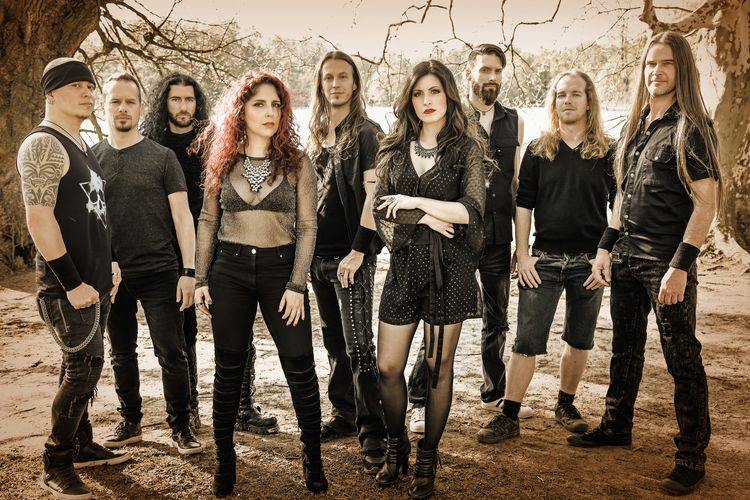
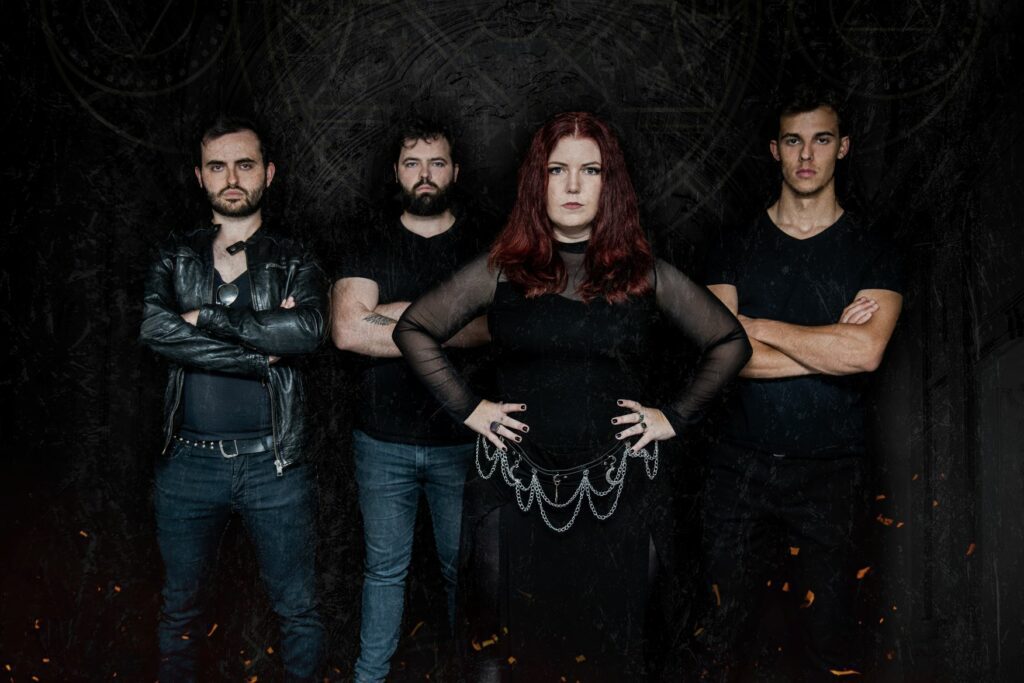
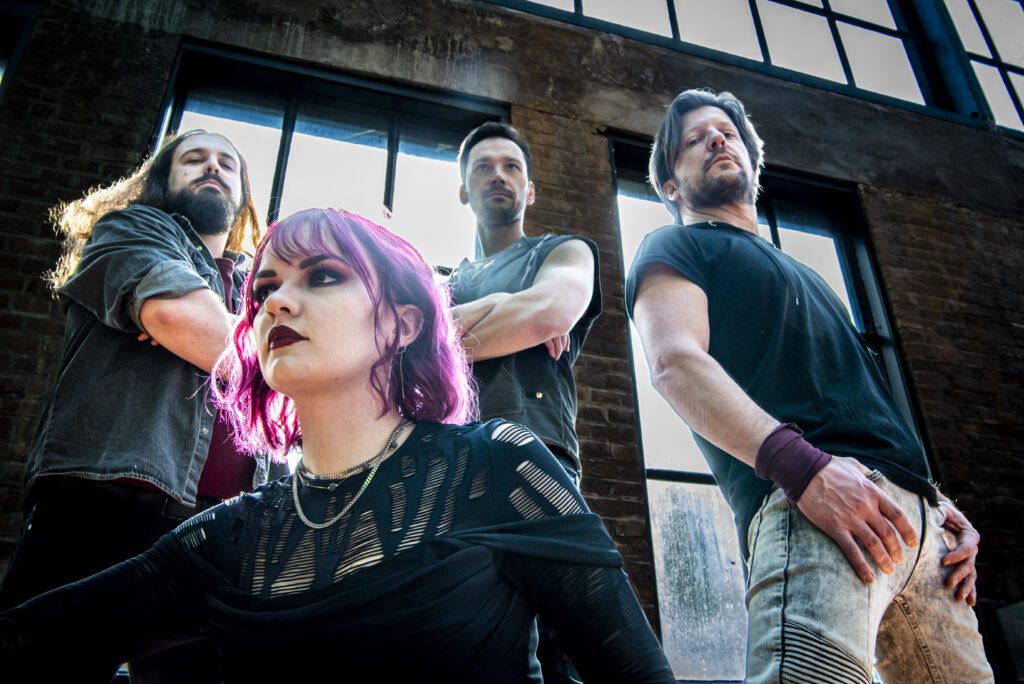
Dál Riata is a band from Glasgow, Scotland that formed in 2017, and have just brought out their first full-length album on April 12, 2024. In case you were not aware, their name refers to an old Gaelic kingdom in the Middle Ages, that used to encompass north-eastern Ireland as well as the western seaboard of Scotland. It should come as no surprise to anyone then, that their songs are steeped in Celtic mythology and traditional folk-inspired melodies.
Their style of music could best be described as melodic death metal, while at the same time, it is heavily infused with robust power metal elements. This makes for quite an interesting combination, and bears some resemblance to Ensiferum if you need a near comparison. The band is spearheaded by Carys Serries, who is also not your stereotypical frontwoman. Wielding her six-string bass guitar like a trained warrior in the heat of combat – a lethality which is matched only by her blood-curdling death vocals – Serries definitely brings plenty of presence and personality to each of these compositions. Her pitch is much deeper than you might expect as well, almost in the same vicinity as the impressive low notes that she produces from her thunderous bass strings.
But there is one thing that I would care to mention while we’re on this particular subject. It’s probably intentional, but I would have preferred for her voice to have been higher in the mix. Not that it would have helped all that much in understanding what she is singing, but I just believe that it would have produced a far nicer balance overall. As it stands, the production tends to favour the lead guitar above everything else. It forces you to listen to the album at a slightly higher volume, which by itself is probably not a bad way to soak in the experience anyway. And this might have been a much bigger criticism were it not for the undisputable fact that guitarist Scott McLeod is simply great at what he does. It is difficult to complain, and really that’s not what I’m doing, but it might be something just worth considering as an improvement for any future releases. Meanwhile, guitar enthusiasts can sit back and enjoy.
There are plenty of hooks in here for you to be caught on, and they show up early in the runtime. Take the opening track, “Hound of Culann”, which lures you in with its Maiden-esque guitar licks, before happily snagging you and stringing you along. Or the merry-sounding leads on “Destiny’s Cry“, which accurately replicate the precise feeling of charging off on a huge adventure. It’s also worth praising Scott McLeod again for lending clean vocals to the chorus along with Serries, adding a more classical feel. “Trial By Water” is yet further bait for your senses, with its instantly enticing riffs. Although one of the guitar solos in this song does end a little flatly in my opinion, and could have used a bigger exclamation point. It’s perhaps a small reminder that the band still have room for growth.
“Andraste’s Favour” introduces some acoustic elements, which also make a reappearance on later tracks too, such as “Nine Maidens of Dundee“. The contrast this provides is great, and endows the proceedings with a more naturalistic flavour. Halfway through the album, and the band are still slugging away with plenty of passion. “Light Blind Sorrow” is a total belter of a track, but my fondest feelings are reserved for “Otherworld“, given its thrashier approach, and throwing-down-the-gauntlet, “Come at me, bro!” attitude: “I will stand // I will fight // Until I wear the crown of all Mankind”.
After a few false starts in “Mag Tuired“, Dál Riata continue on their bloody march. And this time it is the gods they have in their sights within this mythical plain. Yet another powerful number, with some heavier riffing and light orchestral elements on display. “Nine Maidens of Dundee” brings the album to a close with another Celtic tale. The story here is about a farmer who loses all nine of his daughters to a dragon or snakelike creature after sending them to a well to fetch him some water. Perhaps linking back to the album artwork, which is fantastic too by the way. In summary, I really liked this first offering by Dál Riata. While I felt the production could have perhaps been done a little differently, it still doesn’t diminish from this very solid collection of tracks.
Verdict: Dál Riata’s self-titled debut album wears its Celtic heritage proudly, and succeeds in its cultural representation.An intriguing melting pot of mythology and varying styles of metal,it’s an impressive introduction for the band, and one that deserves to be heard by a wide audience of metalheads.
If you are not yet acquainted with Minneapolis-based symphonic metal band AfterTime, it is well past time to change that. And what better place to start then with their brand new studio album, “Arcane Horizons“, which just released following a successful crowdfunding campaign. This production promises to embark you on a thrilling adventure across uncharted territories and vibrant sonic landscapes. An invitation that is reflected not just in the album’s title, but also the picturesque cover art by Gogo Melone.
Your main companions on this mystical journey include the exceptional band line-up from 2021’s EP “Infinite Legacy. However, audiences will be pleased to know that members of the MPLS (imPulse) choir have also formed their entourage again. And rightfully so, as the 16-person choral ensemble brings an added layer of depth and gravitas to what is already an epic foundation. Combine all this talent with the sublime orchestrations of Vikram Shankar, together with the skillful mixing and mastering of Jack Kosto (Seven Spires), and AfterTime have all the necessary elements in place for a truly immersive, and blockbuster cinematic listening experience.
Which is exactly what this album delivers. At the very beginning, we are treated to a highly “visual” orchestral and instrumental intro titled “Ultra Terram“, so described because it will paint images in your imagination as the inspiring melodies resound in your mind. Acting as a prelude of things to come, it effectively grows your anticipation, and instils a heightened sense of drama. Featuring indigenous-sounding wind instruments and folksy percussion, which are then further adorned by angelic strings and glorious chants, your spirits cannot help but be lifted as you move into the ensuing number, “Arcane Horizons“. This is the title track of the album and our first taste of the music now that the entire band has entered the scene, and it instantly becomes clear that they are indeed deserving of the preceding hype. The vocals of AfterTime‘s fabulous frontwoman Sarah Wolf immediately catch your ear, as she wastes no time in showing off high notes unattainable by most other mortals. Though notably, it is a peaceful style of escalation, never feeling at all confronting or overpowering as can sometimes be the case with operatic singers. Instead she melds in nicely with the choir and orchestration. The same cannot be said for guitarist Brad Sturgis, on the other hand, who injects some much needed abrasiveness into the song with his throaty growls. Fans of Epica will no doubt enjoy this dynamic, as the energy is very similar.
Whereas the next guaranteed hit, “Sons of Fenrir“, is bound to prick the ears of many Xandria fans, particularly those fond of the Dianne van Giersbergen-era albums. The MPLS choir prove their worth once again, with a truly astounding performance that will blow you away with its magnificence. They still fail to overshadow Wolf though, who somehow manages to ensnare your focus at all times. Except maybe during Chris Radke’s majestic guitar solo in the final moments. While on the topic of show-stealing appearances, the track “Lust and Rust” is definitely that for Wolf, who briefly splits off from the rest of the group so as to deliver what is essentially a heartfelt soliloquy, showcasing her theatrical side while also deepening her connection with the listener in a more direct manner.
This raises another important aspect of the album. The immersion you feel while listening is largely aided by the fact that AfterTime are not just esteemed musicians, but also great storytellers. Many compositions on “Arcane Horizons” guide the listener through common folklore and mythology, but they are also complemented by some original stories that have been written by the band as well, such as on “Armored Heart“, and my personal favourite “Goddess of Dark Horizons“. The latter tells the tale of a powerful goddess who rescues a tribe of warriors caught in a dangerous storm at sea, and features some truly well-narrated, and addictive verses by Wolf, who makes the act of story-time look easy. And the song is a most welcome sea change from the well-treaded mythology of Homer’s sirens.
As she looks out across the horizon The gray clouds appear and the high waves ascend A battle of will is upon them Their sanity tested through these endless times They’re watching the sun disappear!
AfterTime – Goddess of Dark Horizons
But if the lyrics don’t keep you glued to your speakers, then the music is sure to maintain your engagement level. Especially when it comes at you as energetically as “Amongst the Trees“, and full credit to drummer AJ Blakesley for his concussive pounding of the drums, which are likely to leave you feeling a little battered by the end. Especially when combined with the menacingly harsh vocal assault. (The trauma is real). But in all seriousness, I really enjoyed the heavier shift. And given that most of this album strikes a more serene vibe, it definitely stands out to me as a particular highlight. But it’s not the last surprise AfterTime have up their sleeve before the curtain falls, because “Verdant Siren” reveals another, much bigger revelation with the very special contribution of guest vocalist Lara Mordian (Shield of Wings, Mordian). A fact that until recently had been kept a closely guarded secret. Both singers pair wonderfully together, and the beautifully shot music video is a sight to behold.
It’s no wonder that we join next track, “Druid’s Dance“, in such a jubilant mood: “Come, let’s dance with the druids // The equinox is here // Join in the celebration“. If this number doesn’t convince you to get up and move, it will at least put a big smile on your face. Besides, you’ll get another chance to burn off some calories with “Under A Midnight Sun“, which presents itself as a light instrumental jig. I particularly appreciated the fiddle sections. Although just make sure you have some energy left in reserve, because next up is the absolute marathon of “A Prophecy of Realms“. Over a whopping 11 minutes long, it’s divided up into 3 distinct parts and takes several interesting turns, while still interconnected and linked by a recurring melody that pulses like a heartbeat at various occasions. It’s all impressively cohesive, and proves that AfterTime have no problems at all when turning their efforts to much lengthier compositions. There is one last track on the album, and one wonders at this point how they can possibly top what has already been served up. And yet, the band manages to pull it off with “By The Tavern’s Light“, a cheerful drinking song which produces a rather unexpected ending. As we find out that the previous songs of the album were all stories shared among a group of travellers, regaling each other at a tavern on a cold winter’s night. It makes for a brilliant closure to the album, and will have you wanting to raise your drink in solidarity and toast to the band’s success. They have unquestionably earned it.
Verdict: “Arcane Horizons” shows that AfterTime are a cut above the rest, and capable of matching the finest European symphonic metal, in both their production and songwriting. The album is an enchanting experience from start to finish, and wholeheartedly deserves to elevate the band’s stature and recognition amongst fans of the genre.
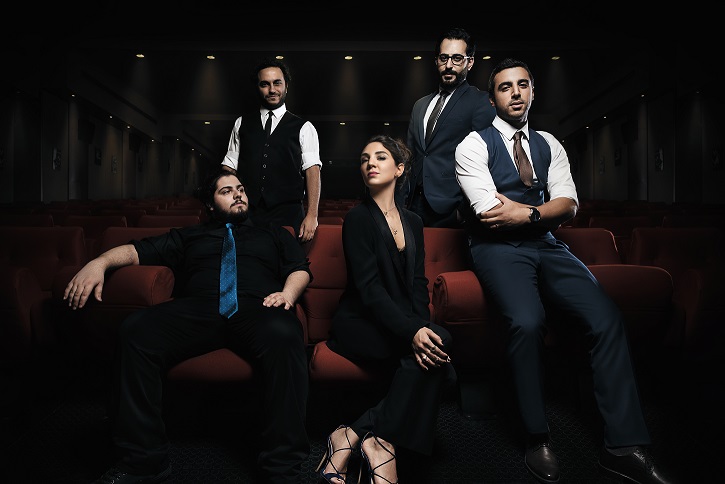
The Lebanese quintet Ostura are possibly one of the most ambitious bands of late, bringing together the worlds of metal, progressive, classical, cinematic and more into an immense musical journey called “The Room”. From the very first notes of the title track with the ominous strings and the sound of a woman panting, I already feel the excitement of revisiting this beautiful album. Then the band begins to play in unison with a real orchestra and a mixture of male and female vocals leading into the mesmerising chorus. Yet not even this introduction can prepare you for what you are about to experience after pressing the play button to launch “The Room”. Ostura will grab you by the hands and take you through the luscious soundscapes they’ve created alongside many guest musicians of the highest order, each bringing their talents to the table in effective ways. They also have the City of Prague PhilharmonicOrchestra playing with them, just like another band who were tied with Ostura for my album of the year in 2018 (see my review of Mayan – Dhyana), and even the Lebanese Film-scoring Ensemble performed some splendid choir sections that elevate the album’s quality to another high. To top things off, we have the legend Jens Bogren himself on the mix and mastering. If you are a metal aficionado like myself then you most definitely heard albums involving this man.
The story behind “The Room” is that of a girl (Youmna Jreissati) suffering from social reclusion and anxiety who locks herself in her room and turns it into an entire world that she creates from her imagination. We are also introduced to two entities: Erosion (Elia Monsef) who represents the girl’s fears and takes over her imaginary realm, and Utopia (Michael Mills) who encourages the girl to push her visionary power to its extent. Bear in mind that these interpretations of the characters are my own and shouldn’t narrow your perception of the story. So how does the music bring to life such an immense concept? The album kicks off in quite an upbeat and colourful manor with the songs “Escape”, “Beyond (The New World)” and “Let There Be” letting you feel the force behind the protagonist’s overflowing imagination and the excitement in exploring this new found domain. Drummer Thomas Lang (mainly known for playing with guitar virtuoso Paul Gilbert amongst others) brings together flavours from jazz, pop, rock and metal while still maintaining the link between the orchestra and the band alongside bassist Dan Veall and percussionist Alexander Abi Chaker. The drum beats and fills sound heavy and energetic when needed to match the more intense moments but they’re also dynamic and fit in with the smoother passages too. To put it simply, Thomas Lang is a genius. “The Surge” is a great example of how he matches his playing to the evolution of the music before the song transitions into a dubstep explosion.
There are other electronic elements throughout the album that often serve as ways to link the different changes in tonality keeping the listening experience fluid. You will also notice that keyboardist Danny Bou-Maroun punctuates the melodies of each song without getting overshadowed by the orchestra, adding a layer of blooming to the guitars which are handled with care by Alain Ibrahim and Marco Sfogli. The album begins to take a darker tone on “Erosion”, the girl’s imagined world starts to turn dim for it cannot be perfect since it stemmed from her unstable mind. The rhythm section gets heavier and the transitions more unpredictable, like the switch from an oud to a guitar solo which sounds amazing. Other traditional instruments take the spotlight on rare occasions like a violin, cello and flute thus reinforcing the diverse cultural flare of the album. The moments where the band suddenly merges with the orchestra are breathtaking. Check out the ascension in “Let There Be” and dare to tell me that doesn’t equate to your favourite film soundtracks. “Deathless” is one of the heaviest songs with its stomping groove coupled to some triumphant-sounding arrangements. It also has an incredible chorus that will make you want to sing along, in fact every song on the album has one. “Darker Shade Of Black” starts off with a beautiful acoustic guitar-driven verse before Michael immediately shifts mood as the song turns into the heaviest chorus on the album.
This brings me to the vocalists who are the main vectors of emotion as they sing with so much conviction. They each add their own personality to the music depending on the character they play. Elia has a fierce and dominative presence yet he manages to keep a form of serenity in his expression. Michael has a higher and mostly jovial voice that fits the enthusiasm of his character but he can provoke a great feeling of distress in the heavier sections (his wailing in “Deathless” is awesome). As for Youmna, she is incredibly pure and moving in every appearance she makes (“Mourning Light” gets to me every time). She evokes the girl’s innocence and helplessness towards the events that unfold. Throughout its concept, the album brings to mind meaningful themes such as ambition, perfection, psychology, anxiety, anger and conflict. The music never pulls too much towards a single sentiment and instead constantly stirs an eclectic range of emotions.
Last but not least, Marco‘s guitar solos are always technical and still keep the feel flowing at full force. I won’t bother giving any highlights since all of his leads are fantastic. That also goes for Özgür Abbak‘s stellar solo in “Only One” and we even get an appearance from Arjen Anthony Lucassen who makes his guitar weep in “Darker Shade Of Black”. The final song “Duality” is the amalgamation of everything I’ve said in this review. It begins with an invigorating composition as Elia‘s vocals lead the way, letting you know you’re reaching the album’s climax. It then turns into a galloping instrumental before leaving you with one of the heartiest endings I’ve ever heard. There really is too much to say about this album so I’ll stop here. “The Room” has the perfect balance of every musical element, it’s a union of sonic bliss that took me on an adventure to the point where I needed a few minutes to adjust back to reality after it ended. If you are fairly open minded when it comes to music, this album will surely make some big waves with you. According to the band’s last Facebook announcements, a new album is on its way and I could not be more excited!
While Mark Jansen and Arièn van Weesenbeek are mainly known for being members of Epica, their other band Mayan certainly has its own take on bombastic symphonic metal and shouldn’t be overshadowed by bigger names in the genre. This is my very first review on the site so I want to start with a release that is very special to me. Dhyana, Mayan‘s third full length album is nothing short of phenomenal and an absolute game changer for what metal music can be. I discovered it when it was released in 2018 and have been continuously coming back to it ever since. The first big surprise about Dhyana is the amount of band members involved which adds up to eleven people, six of which are vocalists! You could say that Mayan is kind of a supergroup considering that all of its members were previously in other bands. On top of that they’ve managed to hire the City of Prague philharmonic orchestra to perform all of the classical instrumentation which adds a lot of production value to the music.
Now having a metal band with six singers and an orchestra might sound like a difficult or even impossible project to manage without it being a complete mess, right? Well fear not because the technicians in charge of the engineering, mixing and mastering are professionals and knew exactly what they were doing. They’ve done a splendid job at mixing all of these elements together with each band member (and the orchestra) having their moments to shine without getting in the way of one another. The music is composed in such a way that the different instruments and voices interact and answer to each other, thus pulling the listener into a jaw-dropping and hair-raising musical journey that demands full attention.
Beyond the huge sound and production value, Dhyana contains a lot of diversity within its songs taking you through symphonic metal, death metal, power metal and more. The vocals shift between operatic soprano vocals (Laura Macrì), clean male singing (Henning Basse, Adam Denlinger) and female singing (Marcela Bovio) as well as death growls (Mark Jansen, George Oosthoek). Having all of those characters in just one album makes for a delightfully entertaining musical experience. As soon as “The Rhythm of Freedom” begins, you are assaulted with blast beats, fast guitar riffs, massive keys and orchestration before the different vocalists arrive one by one. This song sends you straight into the overall mood of the album which induces a mixed feeling between triumph and apocalypse. As soon as Henning starts to sing, you will lose all sense of reality and find yourself chanting with him while raising your fist in the air. “Saints Don’t Die” is another great example of his impactful presence. Despite him leaving the band the same year this album was released, Adam does a good job at filling in for him live and brings his own potent voice in tracks like “Tornado of Thoughts (I Don’t Think, Therefore I Am)”. This song will thrust you into a twirling dance of varied tones and vocal styles all complementing each other (as they do throughout the whole album).
While the album is generally intense and bombastic, it does have its calmer moments when Laura will often take the spotlight with her spine-chilling performances like on the title track or the soft moments in “The Illusory Self”. She also increases the dramatic tone of the orchestra in heavier sections like in “Rebirth from Despair”. As for Marcela, every appearance that she makes is awe-inspiring, just listen to her choruses in “The Power Process”, “Saints Don’t Die” and “The Illusory Self”. After watching some live videos of the band I realised that she even throws in some harsh vocals in “Rebirth from Despair”. Wow! These last three tracks are great examples of how all the elements on the record contribute in building up a perfect climax with each vocalist making an entrance. With that being said, the foundation of the band’s sound is actually death metal and I must give praise to Arièn‘s drumming since he provides precise and heavy drum beats that will make your neck snap and that somehow fit hand in hand with the symphonic bombast. The guitars and base add to the intensity of the drums and turn the beats into tasteful headbang-worthy grooves. We even get some guitar solos in “The Flaming Rage of God” and “The Power Process” and a base solo in “Rebirth from Despair”. In this song we have a fantastic duel between Mark and George who reinforce the weight of the music with their crushing harsh vocals especially on the apocalyptic-sounding “Maya (The Veil of Delusion)”. I should also add that each song is memorable and has new details to pick up on with each subsequent listen. With the music being so well fashioned, it’s good to also have meaningful lyrics which I believe evoke psychology, spirituality and religion.
In conclusion, Mayan have put together one of the most thrilling albums I’ve ever had the pleasure of hearing by successfully unifying different genres of music and doing so in a classy way. It’s a complex yet extremely moving musical experience that resonates deep within my soul. If you enjoy metal music that’s ambitious and, like me, agree with the “more is more” philosophy, then I think Dhyana will make the same impression on you as it did on me. With all the efforts put into its masterful execution, I can’t give it anything less than the maximum score. I eagerly await this project’s next output and I shall continue to return to this album as I’m sure that it will keep renewing itself. By writing this review I can only etch the surface of this album, but that’s why it has endless replay value.
A lot of fans were naturally disappointed when Kalidia, one of Italy’s best power metal groups, announced they were splitting up in 2023. But change can sometimes be a positive thing, and looking back on the news now, it is difficult not to view it as anything but a blessing in disguise. Seeing as the formermembers have now risen up from the ashes, brushed themselves off, and forged ahead with separate metal acts. One of these ventures is the recently revealed Xeneris, featuring ex-Kalidia members Frederico Paolini (co-founder, composer/guitarist) and Roberto Donati (co-founder, bassist). While the other is Nicoletta Rosellini’s (vocals) very own Alterium project, accompanied by former bandmate Dario Gozzi (drums), which just released its first full-length album “Of War and Flames” on March 8th, 2024 via AFM Records/Soulfood Music.
This ‘two for the price of one’ deal is not the only happy side-effect, since the breakup also seems to have given both parties a revitalised purpose and vigour. That’s certainly the case when judging Alterium‘s debut album, but one could also make the same early inference from Xerenis’ first single “Eternal Rising“. With regards to Alterium in particular, it seems as though the new setting has done a world of good for frontwoman Rosellini, who sings like she has been given a whole new lease on life. Rounding out the band roster is: Paolo Campitelli (guitars), Alessandro Mammola (guitars) and Luca Scalabrin (bass). Each of whom brings their past experience of working with other bands in the power metal genre (e.g. Draconicon, Kaledon, and Altair). And like the mathematical summation symbol (Σ) present in the band’s logo, Alterium benefits substantially from the accumulation of this combined wisdom. Because the end outcome is a highly cohesive and formidable new quintet, equipped with a near limitless amount of energy and creativity at its disposal.
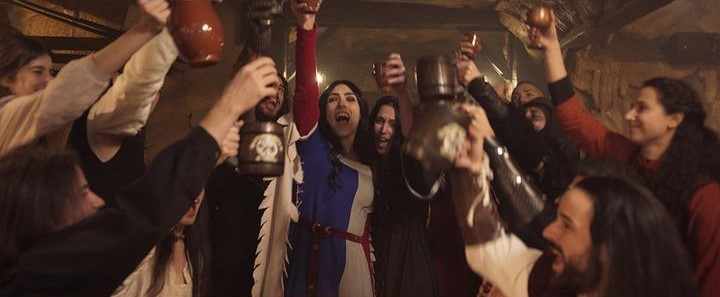
A fact apparent from the beginning, with opening gambit “Drag Me To Hell” immediately breathing new life into the genre. The flying pace and boundless exuberance of the track will definitely get a few hearts racing, while it barrels through your speakers and stealthily earworms its way into your head. Those of a geekier persuasion may also pick up on the references to Warcraft lore in the lyrics, which describes the crowning of a new Lich King. It’s not the last time Rosellini exposes some of her gaming interests on the album. Another example later on is “Crossroads Inn“, which serves as a fun, light-hearted metal tribute to a management video game bearing the same name. Only in the power metal genre could a game simulating a medieval tavern be conveyed so earnestly, and the Italian group spare no effort or detail in recreating the atmosphere in an accompanying music video as well.
In earlier moments of the album, Rosellini lends her enchanting vocals to “Siren’s Call“, where she makes a truly compelling appeal: “Hear my cry // Flowing with the winds and storms // Once you’re mine, forever you will be“. The song is of course inspired by the scene in Homer’s “The Odyssey“, where Odysseus is forced to tie himself to the mast of his ship in order to resist the dangers of the siren’s call. Honestly if the sounds he heard were even remotely close to Rosellini’s enticing performance here, then I could fully understand the necessity of this measure. The following track “Of War And Flames” takes us from Greek mythology to Egyptian mythology. The song shares the same title as the album, and once you hear it you’ll understand why, as it’s definitely the main highlight. The tune focuses on the story of Sekhmet, a goddess of war who embodied the powers of the sun god Ra, and was said to be capable of vanquishing her enemies with her fiery breath. If you need help visualising her, the album artwork also depicts Sekhmet as she is entering her temple. You could argue that she bears a likeness to Rosellini herself, who is similarly renowned for the characteristic warmth of her singing voice, and whose vocal delivery is regularly a force to be reckoned with as well. The track is further enhanced with regal choirs and symphonic parts, and blessed with a multitude of hooks and catchy vocal lines, including in the pre-chorus bridge showcasing Rosellini’s range and impressive ability to sustain notes:
Her bloodlust never ends Not even after the revenge Surrender to her rage
Alterium – Of War and Flames
Alterium continues to impress elsewhere on the album, turning up the heat and intensity again with “Firebringer“. In typical power metal fashion, it is a fast, robust track – but with some added symphonic flourishes to give it that richer dynamic. Rosellini’s melodious and powerful tones also fluctuate between a tight, lower register to a more open and airy pitch. “Shadowsong” guides us into the latter half of the album, introducing a plethora of intricate instrumentation, and mighty face-punching drum beats, whereas “Crystalline” finally slows down the tempo a bit, and gifts us with beautifully drawn-out, soaring guitar solos amidst a touching piano-laden ballad; a sound that admittedly has more in common with Rosellini’s gothic metal band Walk in Darkness. Nevertheless, “Heroine of the Sea” quickly pushes it back to a more power metal focus, with a bobbing, mid-tempo number which takes you on a pirate voyage across the seas: “Sailing on, to a new adventure // Time to fight, time to die”.
Alterium rachet up the speed and technicality for one more power metal jaunt in “Chasing the Sun“, the last original composition on the album and one of the more interesting due to the meter changes and neo-classical arrangements throughout its duration. I also need to give particular credit to the mixing and production of this album, for everything sounds so crisp and neatly balanced. It really does have a completely fresh sound – even after over a month of listening to it before writing this review. Alterium close out their debut album with a final cover of Sabaton’s “Bismark“, and while this Swedish band are probably a little over-represented when it comes to covers of their songs at this point, it is still an admirable and enjoyable rendition. Plus it is very much consistent with the band’s affection for performing songs that contain a story or historical context. On the whole, Alterium have impressed on every conceivable level with “Of War and Flames“. I’d always had an inkling that they would create a great album, but I was wholly unprepared for them to go a step further and deliver such an epic masterpiece. I couldn’t have asked for a better continuation of their previous legacy, and I’m personally more excited than ever to see where they take us next.
Verdict: Alterium’s “Of War and Flames” is mandatory listening for every power metal fan. The decision by ex-Kalidia members to found this new entity has not only borne out to be a calculated and beneficial manoeuvre, but has surprisingly culminated in the best power metal album I’ve heard for a long time. A triumph of both perseverance and adaptation.
Balance of Power are no strangers to the heavy metal scene, having released a string of albums from the late 1990’s to early 2000’s. But it’s fair to point out that they haven’t exactly been in the spotlight for a while. Their last album, “Heathen Machine” (2003) was released almost 21 years ago! So, when their new creative offering comes out on April 19th, 2024 via Massacre Records, and is titled “Fresh From the Abyss“, just know that they are not kidding. It does feel as though they are crawling out of an abyss of sorts.
As you might well have expected, the band have returned from this hiatus with a brand new line-up. Founding members Tony Ritchie (bass) and Lionel Hicks (drums) are now joined by female lead vocalist Hazel Jade and guitarists Chris Young and Adam Wardle. Jade’s presence represents a major change for Balance of Power, which previously had only employed male vocalists, and is a big reason for why this album piqued my interest. On “Fresh from the Abyss“, she consistently demonstrates that she belongs to a class of hard rock singers that is all her own. And if there is anybody who can “wow” listeners and bring back attention to Balance of Power, then it’s definitely her.
Jade dishes out plenty of depth, emotion, and electrifying intensity on each of these tracks, but with a level of sophistication that avoids overshadowing the rest of the band members. In fact, you could say that the “balance of power” is just right. And for being able to achieve this, we should also bestow credit to Sam Lowe and Mike Plotnikoff for the mixing/editing. But whatever the reason, her voice fits perfectly with the music here. Something which will no doubt come as a relief to long-time followers of the band. While still on the topic of line-ups, it should be further noted that the album line-up differs slightly from the current band line-up, with two guitarists (Chris Masimore and Stoney Wagner) having contributed to the album recording before handing over the reins.
Balance of Power steps out from the shadows with opening number, “Last Man Down“, a defiant power anthem from a band which is surely looking to re-establish their profile, and pay acknowledgment to their long absence with the opening lines: “This is not the ending I was looking for // Unintended static cuts the air“. A “no-nonsense” affair with an edgy, hard rock groove serving as its backbone, in many ways it is the ideal way to kick off the album. It later culminates in a frenzy of guitar and keyboard solos, adding a distinctly progressive flavour to the traditional mix.
As if related, “Never Be Here Again” is the next track, and again ties into the band’s history somewhat by drawing our attention to the speed of time (and perhaps even showcasing a pining for lost time): “Suddenly it comes to me like a thunder in the night // We can never be here again, never be here again“. Indeed, the progression of time appears to be a constant theme on the album. “One More Time Around the Sun” is another such example. As Tony states, this track is all about “wanting to spend another year and then another and another with the person you love”.
It’s certainly heavy, and we’re not just referring to the music. It would appear that Balance of Power are not ones to shy away from dealing with the big topics. Another case in point is “Monster“, which focuses on grappling one’s inner demons. But it’s all wrapped up and presented in such a way that such depressive themes do not become too overwhelming to the senses. In fact, somewhat contradictorily, I caught myself grinning for much of my time with the album – so joyous was the experience. Particularly with more energising numbers, such as “Deadlands” and “Abyss“, which are both punctuated by a quicker tempo, and have some particularly sweet guitar solos. Rounding out the overall package is “Velocity“, which eschews the band’s typically classic approach for a more modern-sounding aesthetic, and “Rage of Ages“, with its slower rock n’ roll rhythm and big vocals. It’s an album that will no doubt be appreciated by fans of classic metal or hard rock. And regardless of whether or not this statement applies to you, there is no denying the incredible feat Balance of Power have pulled off with “Fresh From The Abyss” after being out of the game for so long. Not only does it serve the purpose of re-introducing the band to the world, albeit in a different guise than before, but it also makes a strong case for their reappearance and sets a solid footing for more to come. Here’s hoping we don’t have to wait nearly as long next time.
Verdict: A miraculous revival and rebranding for a band that has just emerged from a long hiatus. It matters little if you are already a fan of Balance of Power or hearing them for the first time, “Fresh From The Abyss” is the start of a new journey, and anyone who listens to traditional heavy metal will definitely want to tag along for the ride.
Amaranthe is a band that has deviated little in its sixteen-year tenure. Having established their genre-mashing signature style from the outset with 2011’s self-titled debut album Amaranthe – a carefully orchestrated balance of competing influences including pop, EDM, power metal and core/death metal – the Swedish metallers have done pretty much everything in their power to adhere to this template ever since. And to their credit, they have been successful in replicating it again and again during their career (and some might argue with sparingly little to show in the way of nuance).
This level of consistency is perhaps something to be applauded. But on the flip side, it can breed predictability. And worse, a growing sense of tedium. Which brings us to their latest album The Catalyst, and my biggest question heading into this review: can it add anything new to the equation, or return to us some of the initial excitement of those earlier albums? Back when the music still felt a bit fresh and daring. The short answer is ‘no’. But at least it does make somewhat of an earnest attempt.
In the words of Amaranthe’s guitarist Olof Mörck: “We have done these things before, but we’ve never been as theatrical as we have this time”. And to an extent, this is true. There is certainly plenty of drama and build-up at the start of the opening title track “The Catalyst“, until the inevitable onslaught of the band’s trademark heavy dance rhythm punches out at you from the speakers. And no matter how many years have passed, their music is still as youthful and vibrant sounding as it has ever been. There is an infectious level of optimism as well. But this is nothing new for Amaranthe either. Something that is new however is the harsh vocals of Mikael Sehlin, who makes his growling debut on The Catalyst in place of previous member Henrik EnglundWilhelmsun. According to Sehlin’s Facebook page, he has previously been the lead singer for Engel, Degradead, and Paralydiu. But regardless of how the band found him, Amaranthe have clearly chosen wisely with Sehlin, for he comes across as a very natural fit, and transitions seamlessly into the role.
The vocals have always been an extremely strong feature of Amaranthe. So it’s good to know that this album is no exception. Sehlin joins the impressive clean vocalists of Elize Ryd and Nils Molin, and together their singing forms a harmonious chemical reaction that definitely needs no catalyst. We of course have to focus our praise on Elize Ryd though, who takes centre stage in this theatrical play, and for good reason. Ryd regularly pushes the music to unimaginable heights with her soaring high notes. And at an apparent ease that would make most singers jealous. “Outer Dimensions” is one such example of where Ryd’s voice lifts listeners above and beyond the stratosphere.
Perhaps that’s why the choruses remain such a highlight. Amaranthe certainly know how to pen catchy lyrics. Songs like “Insatiable“, “Liberation“, and “Damnation Flame” will have you singing along on your first listen, guaranteed. Whereas other tracks, such as “Breaking the Waves” and “Interference”, may take a bit more time to latch onto you. But at the end of the day, it’s still Amaranthe. And not a great amount has changed, despite some of the marketing hype. There are glimpses where the band does break away from this ‘rinse and repeat’ approach at various times, for instance on the cool, cyberpunk-inspired “Re-Vision“, or the more classically-inclined duet “Stay A Little While“, but these moments are rare and disappointingly transient in the grand scheme of things. The new found theatricality does at least show up strongly in the visual department, where Amaranthe have really taken their dramatic flair to the next level. For instance, on the video for “Damnation Flame“, which showcases some interesting transitions between live-action and illustrated animations.
Yet ultimately, your enjoyment of The Catalyst will come down to your level of tolerance for treading the same beats. I have no doubt that relatively new fans will absolutely lap this up. But if like myself, you have been following Amaranthe from day one, then it’s highly likely at this stage you might be starting to tire of the band. And it’s through no fault of their music, per se, which is still of the utmost highest order. But more a case of simply wanting to hear something different after all this time. And while this latest album hints at some promising moves in that direction, it’s sadly not enough to surpass the overriding sense of familiarity.
Verdict: The Catalyst is another slickly produced collection of highly catchy and upbeat power anthems. But now seven albums deep, it won’t do anything to cure your fatigue of Amaranthe’s sound. And for long-time fans, that’s really its biggest problem.
Double, double, toil and trouble. Fire burn, and cauldron bubble.Two years after the surprise success of their debut album, “Daughters of the Night“, Italian symphonic / power metal band Nocturna are back with a fresh concoction of ‘dark fantasy’ metal tunes. Luckily for us, many of the key ingredients are still present, so if you liked their first effort, then you’ll no doubt want to check out “Of Sorcery And Darkness” when it releases through Scarlet Records on April 19th.
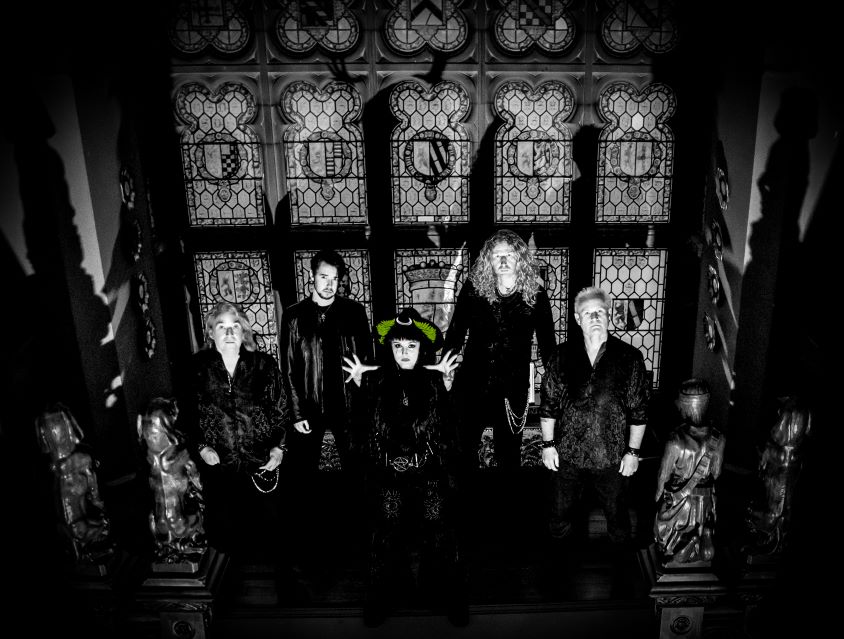
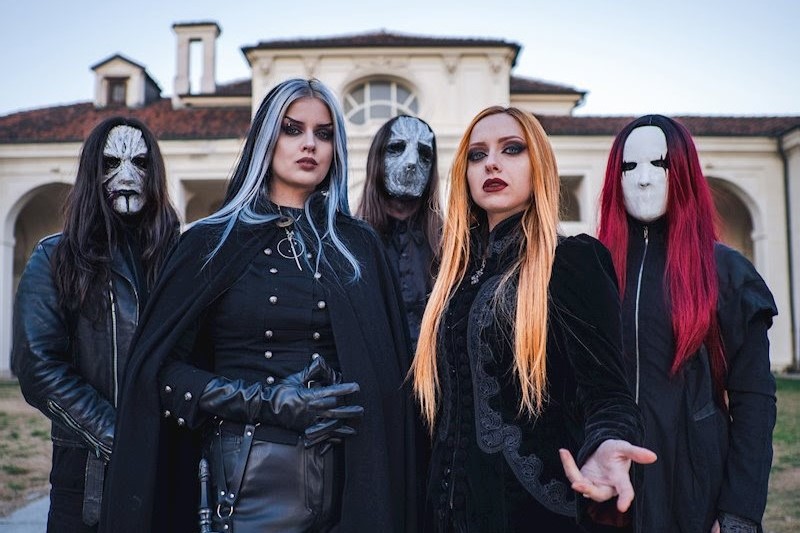
Songwriter, guitarist, and multi-instrumentalist Frederico Mondelli (Frozen Crown, Volturian & Be The Wolf) remains the mastermind behind these magical songs. But it is the bewitching duo of Grace Darkling and Rehn Stillnight that is once again responsible for bringing them to life. Together they stir up a potent mix of theatrical and operatic vocal harmonies. And it is near on impossible to resist their charm, which could explain why they are the main focal point in all of the promotional material for the album. To the extent that other members of the band are even donning masks (which fans have eagerly likened to Slipknot). Filling out this mysterious line-up nonetheless is Hedon (guitar), Antares (bass) and Deimos (drums).
The album kicks off in high gear with “Burn The Witch“, a title which doesn’t exactly bode well for our two witchy frontwomen. The song is very much of the power metal variety, and immediately draws quick comparisons to Frozen Crown due to its brisk and majestic feel. We are greeted with the vocals of Grace Darkling first, who hits all the right characteristics in her slick and histrionic belting style. Conversely, Rehn Stillnight embodies a lighter, more classical touch as she chimes in moments later. Both voices are fundamentally different, but they are equally matched, and have an undeniable synergy whenever brought together. Yet “Sapphire” confirms that they are more than capable of carrying these songs on their own, as we are given the chance to treasure each of the vocalists individually while they take turns with the verses. “Noctis Avem” ups the drama, along with the heaviness. There is an impressive wail that leads us to the opening verse. And the song has a steady, upbeat rhythm that sporadically ramps up with the drums in order to accentuate certain moments. But it was actually the bridges that garnered most of my attention, as the harmonic pitches here sound absolutely divine. On that note, “Creatures of Darkness” is practically biblical. Not just for its grandeur and scale, but also for its many lyrical references.
Our Solace, For Long Denied Lies In Heaven’s Night As Falling The Brightest Knight Lucifer’s Demise We’re Burning, Sons Of The Light Daughters Of The Night Returning To Grace And Might
Nocturna – “Creatures of Darkness”
The almost acapella start of “Midnight Sun” introduces us to yet another powerful banger. When the band kicks in with full-force, the listener is whisked away at a heady tempo. The track also features a fast breakaway guitar solo, and the wait has definitely been worth it. The key change towards the end is the final icing on the cake to heighten the exhilaration. A brief instrumental interlude ensues with “First Disobedience“, showcasing haunting bird sounds, whispered words, and some acoustic, neo-classical elements later on in the track. The atmosphere is suitably set for “Seven Sins“, the first single and already monstrous hit, with its thunderous bass and “Phantom of the Opera”-style piano notes enshrining it as one of the more memorable pieces of the album.
“Through The Maze” leans even more significantly into this stagey, neo-goth operatic vibe, with Stillnight commencing the number with her vocalised scales and epic high register. It is perhaps my favourite performance of hers in the whole album. But Darkling also brings something new to the table, so as not to be outdone, with a more sultry and commanding tonality to her clean singing than we’ve heard from her up to now. And more than a hint of chic in the intonation. The song is a definite highlight. But it doesn’t stop there. “Strangers” gets the blood flowing again, with a pumping rhythm and anthemic melody. The start-stop delivery of the chorus lines giving it a similar mood to Nightwish’s “Wishmaster“. Whereas final track “The Last Day On Earth” brings it home, with a touching ballad and a reminder to make the most of every moment and treasure them with those we love: “Life’s just the blink of an eye // A memory to be erased in time // … Never forget who wiped your tears // Like it was our last day on this Earth“. It’s a moving finale, and a brilliant way to close the curtain on this already magnificent opus.
Verdict: The second time is the charm for Nocturna’s “Of Sorcery and Darkness”, which manages to improve on its predecessor in every way. Converying a darker aesthetic and deeper maturity, plus better performances all round, Nocturna look ready to cast an even more powerful spell over the metal scene.
If ever there was a band you could recommend to fans of Nightwish’s Anette Olzon-era albums (Dark Passion Play / Imaginaerum), then Gallia would most certainly be it. Founded in Belgium, this four-person strong cinematic metal project independently put out its first full-length album, Obscura, all the way back in September 2, 2022. So obscure was this release that it managed to escape our attention entirely. Until very recently, that is. And we’re happy to have found it, as it’s clearly an album deserving of greater visibility. Even if it leaves a strong feeling of déjà vu.
The term ‘cinematic metal’ is still a relatively new label, but one that we have started to see bandied around by a couple of other bands – most notably Catalyst Crime and Malevolent. And while we are not sure if Gallia can claim to be the earliest progenitors of this particular term, they certainly embody it in every single aspect of what they do. From the epic choirs and orchestral symphonies to the bombastic arrangements and soaring melodies, all of it screams Hollywood production. Almost as though you are listening to the soundtrack of a mega-blockbuster movie. And at the epicentre of it all is our cast of visionary performers: Yannic Maris (Guitar), Laurens Vandebroek (Bass), Ties Jehoul (Drums), and last but not least, the impeccable leading lady which is Elyn Vandenwyngaert (Vocals).
“Aperture” gives us a preliminary peek into the fully realised musical realm that Gallia have created, with a short one-minute introduction that includes a ticking clock amidst a melody of sparkly keyboard notes, instilling that “Disney” magic and sense of childish wonder. It’s not long until we are suddenly in the thick of it, as the prelude flows directly into “Return of Time“, with its forceful guitar parts and momentous epicness. The sheer weightfulness of the downtuned riffs displaces a significant volume of air particles in front of your speakers, and gives rise to a new definition of the phrase ‘wall of sound’. It feels absolutely massive. And the interplay between Elyn’s vocal lines and the crunching distortion within the verses is also perfectly executed. With “Blackout Queen“, we start to witness the band’s knack for storytelling break out in the lyrics, proving once again that the idea behind cinematic metal is not so baseless or outlandish. And it’s around this moment that I discover there is a fully-fledged storyline that runs throughout the production, which has even been fleshed out in a fictional novel with each chapter of the book representing one of the songs. I can’t help but be impressed by the scope and ambition of this project, and part of me definitely wants to explore this further to see if it adds a new dimension. But for the purposes of completing this review within a timely manner, I must be satisfied with solely basing my opinion on the music. The theatrics continue on “Mirage“, which has a distinct carnival-esque flavour to it, again harking back to Nightwish’s Imaginaerum, and focuses on themes of deception and masquerading as something else.
Disillusion caught me once more I have been here before I’m familiar with your disguise Tell me no more of your lies
Gallia – “Mirage”
As you may have noticed, favourable comparisons have been drawn between Gallia and Nightwish, and while that observation absolutely has merit, it’s also a disservice to imply the material here is simply derivative. There are indeed many similarities. Yet flourishes of originality do exist on the album. But unfortunately for the next track, “Reflection“, this is not one of those times. To the extent that we even see Gallia winding up a music box, as we approach this mid-way point of the tracklist. “Path of the Nomad” brings us back to a much stronger footing, with tribal drums and an acoustic set of instruments and various wind accompaniments bestowing a distinctly natural sound. This is played out even more with the folksy interlude of “Free Me“, which creates an earthly, mystical atmosphere that guides us to the next track, “Spirit of the Sea“. A song that is a sea shanty of sorts, except interspersed with far heavier passages. But the real highlight is next with “Chaos“.
This track showcases a hefty rhythm, plodding guitars, and an abundance of machine-gun double-bass drum kicks, which are all presented in synchronicity with the opulent backdrop of angelic choirs, and heroic-sounding orchestral movements. While not operatic in nature, Elyn’s singing still fits the song perfectly, and her high notes are impressive. The half-point breakdown is followed by an arabesque passage, once again adding another twist to this song, in addition to highlighting the band’s immense versatility. Gallia picks up this Middle-Eastern thread again for “Euphoria“, while “Tears of Gold” is the designated ‘epic’ song of the album, clocking in at just over seven and a half minutes. And it doesn’t disappoint. As you would expect, the longer-form allows for more shifts and changes, and the band does well to flex its creative muscles. The ticking clock returns towards the very end, signalling that our adventure is soon coming to an end. There is just enough time for one more song.
It takes the form of “New World“, and this time it’s a far simpler affair. Think along the lines of Nightwish’s “Eva“, and you’ll be getting close. It’s a smart way to cool off from an album that has been mostly full-on since it commenced, but there is still a triumphant send-off in the final minute or so. And Gallia has every reason to want to celebrate with this outing. It’s an incredible first chapter for any band, and a truly astounding achievement if you consider the high production value. It’s only real downfall is its strong resemblance to that which has come before, and for many listeners, this may not even be an issue.
Verdict: Gallia’s “Obscura” wears its influences a little too evidently on its sleeve. But you can’t deny the quality of this production. If you look closely enough, youwill also see that there is a deeper underlying creativity. Here’s hoping this is less hidden in future.
“The Great Divide” is evidence that you should never judge an album by a band’s self-ascribed genre. Beyond God are labelled as a symphonic metal quartet from the Netherlands, which sets the expectation that they will sound stylistically similar to other notable groups emanating from this region (Within Temptation, Epica, Delain or Stream of Passion). But the fallacy of this pre-conception becomes abundantly clear once the euphony of their latest release starts to grace your conscience, and it dawns on you that this is an altogether different type of proposition.
Released on December 8th, 2023 via WormHoleDeath, “The Great Divide” unshackles itself from the typical conventions that you may be accustomed. It is far more dynamic, complex and difficult to predict. No doubt, this could make it a more challenging listen for some. But you should not let this fact deter you. Your main guide through this album is the captivating lead vocalist, Meryl Foreman, whose sombre tones go against the grain, and work to imbue the music with a much darker, and more foreboding energy. Her companions are as equally distinguished, with the line-up featuring Mariusz Krawitowski on guitars, Dennis Winkel on bass, and founding member Ferry Guns in charge of drums, piano and orchestrations.
Starting with the hectic “Cronos“, based on the Greek mythological figure, it is immediately apparent that Beyond God are unique. It is a song that continues to mount in pure intensity throughout its runtime, with no obvious crescendo or release to ease the pressure. There is plenty of orchestration, but most of the power and magnitude is provided by the rest of the band’s performance, which leans more heavily into death metal. It’s not quite on the same level as Fleshgod Apocalypse, but it’s heading in that direction. The furious riffs and blast-beat drumming are clearly dominant in this track, yet it still succeeds in pulling you deeper into the album despite the lack of any clear hooks or payoffs. There is the sense this might all be an exercise in delayed gratification for you are left simply wanting more by the end of this opener. Thankfully, it sets up “Frostbite“, the next track and more accessible single. It is here that we finally receive a more typical song structure and a few noteworthier moments.
The composition follows the story of someone that is caught in a negative situation, and is unable to escape on their own. It is relayed using the analogy of the four stages of frostbite and reaches the conclusion that only the warmth of love can act as saviour. Foreman is the standout in this track, and her hostile barking of the word “Frostbite” on top of the music is a particularly cool touch (no pun intended). Things slow down somewhat on “Coronation“, which is perhaps fitting given that it is about the Covid-19 pandemic and the struggles that this entailed. The crushing heaviness is still as present as ever, but there is less going on in this track for your brain to interpret, and a better cohesion between the disparate elements. This simplified approach also bleeds into the intro of the subsequent track, “Heartbreaker“, and the guitar solo played during this piece is beyond good (Ed – I see what you did there). But it’s not long before the band’s death metal tendencies are on full display again, and we are bombarded by more blisteringly fast-paced riffage, and another battering drum assault.
None of this is particularly alarming, of course, except for the fact that it does take a while to acclimatise to the sonic dissonance on initial playthroughs. The melancholic timbre of Foreman’s vocals is something you would expect to hear in more of a gothic/doom metal context, which can make it difficult to reconcile with the instrumentation in the beginning. But it also adds a uniqueness to this band, and is one of the reasons why they so diverge from their peers. The opposing influences are no more evident than on the title track, “The Great Divide“, but somehow they all still come together in a beautiful harmony, in defiance of the song’s title. And indeed, the main thrust of the song is in fact a message of unity.
Stop the spread of fake News will be your guide For all the lives that are at stake Left and right unite Brightest light of dawn As we’ll be building bridges
Beyond God – The Great Divide
A smooth transition leads us into “The Siren’s Cry“, and Foreman matches the brief of the alluring Siren perfectly with her enchanting singing and persuasiveness: “Come to me // Come to me // Come to me“. But as we know, there is a more sinister undertone, and this soon asserts itself as Foreman shifts back to her menacing vocals to issue the following command: “Now jump! // Jump // Come to me // Jump into the sea // Jump!“. Not only is this an entertaining twist, but I can also see this going over particularly well in the mosh pit. Next track “Pierced” gets under your skin a little, with its social commentary on the shifting perceptions of beauty. While “The Elder Tree” is a musically gloomier affair, with Foreman being especially in her element here, and sounding most at home vocally. But it also hits hard thematically, as it is a deeply personal number which deals with the loss of Foreman’s beloved grandfather during the Covid-19 pandemic. The band picks up the pace again with “Aphantasia“, a song which centres on the phenomenon whereby a person’s brain is unable to visualise any mental images. Before concluding with “After Love Ends“, a song exploring how to move on following the end of a romantic relationship with someone. It is the final track of the album, and while it strikes a sorrowful tone, it does not feel like a breakup – as something tells me that listeners will be back again to spend more time with these tracks.
Verdict: “The Great Divide” certainly succeeds in creating some relative distance between Beyond God and the rest of their symphonic metal peers. Some effort may be required by listeners to bridge the gap, as these are not your stereotypical melodies, but anyone who puts in the time to comprehend them will be surely happy they did.
“Time, what is time?” A question that Moldovan metalcore band Infected Rain seek to explore in their latest opus, “Time“, which was released on February 9, 2024 via Napalm Records. While we may never have the answer, it’s certainly ripe for philosophical debate, and is a concept that this group values, especially when it pertains to their listeners. So, you needn’t worry about wastefully burning through it on their new album.
One thing we do know about time is that it has a tendency to bring changes. And in that regard, you should expect to witness a different line-up this cycle. It was announced by Infected Rain back in May 2023 that two of its long-serving members Sergey Babich (guitars; 2010-2023) and Vladimir Babich (bass; 2008-2023) had exited the group. No explanation was given for the departures, though to soften the blow it was simultaneously revealed that Alice Lane (Hand of Juno) would be joining them on an indefinite basis to take up bass duties. Anyone who has familiarity of Lane’s work will know what a boon this is to the band. The downsize to a four-piece composition doesn’t seem to have affected them either (although I can’t speak for the live implications). Vadim “Vidick” Ojog and Eugen Voluta both return on guitar and drums respectively, and of course most importantly – the enigmatic and prolific frontwoman Lena Scissorhands is back on vocals. And as long as she remains attached to the project, then it is safe to say that Infected Rain retains much, if not all, of its identity and appeal.
It’s a little strange to be reviewing an album where the first handful of tracks are already so well known to me thanks to their pre-release, but it is a validation of their standards that I’m happy to sit through and enjoy them again, instead of eagerly skipping to the new material. So, first up we have the hit singles “BECAUSE I LET YOU“, “DYING LIGHT“, and “NEVER TO RETURN“, and it’s an easy hat-trick for Infected Rain, who are simply out here kicking early goals with each of these headbangers. There is plenty of aggression on display in all, both in terms of the brutality of the instrumentation, and also with respect to Lena’s venomous screaming. At the same time, there are still many of the band’s signature lush harmonies, and mesmerising electronica elements to lull you into a blissful ‘trance-like’ hypnotic state. “NEVER TO RETURN” also throws a curveball with its distinctly far-Eastern flavour, as Lena shares a realisation: “Time, a lesson that we’ll never learn // Moments lost, never to return”.
The rest of the album holds up just as well. Infected Rain obviously saw the commercial potential of the next track “LIGHTHOUSE“, as this was dropped as a new single and music video shortly prior to the album’s launch. As a result, it was still relatively new to me at the time of review, but I could still instantly appreciate the more relaxed and mellow approach. The band fires up again for the curiously titled “THE ANSWER IS YOU“, indicating that their break is now over, and its back to the usual business of crushing skulls and taking names. “VIVARIUM” continues in much the same vein, and is another familiar tune given its reveal and single release about a month ago. It says a great deal about the calibre of this album that so many tracks are worthy of individual promotion. And indeed, practically any song on this album could fit that purpose if the band were so inclined. They are in the zone, it would seem. And their performances display a certain freedom and fluid mobility, even if the lyrics would tend to suggest the opposite mentality sometimes.
In this cage we call our own We are surrounded by a world of stone Like birds that cannot fly In this poisoned, empty sky
Infected Rain – Vivarium
There is still plenty of time left on the clock for Infected Rain to impress, but the band are already well ahead on that front. “PANDEMONIUM” is simply that, as cascading metal riffs and EDM synths attempt to occupy the same moments in space and time. Lena’s guttural vocal fry effortlessly rips through the resulting chaos like a dagger, but she is also equally capable of switching gears, and melding the various layers together like glue, utilising the harmonising powers of her serene-sounding clean vocals. True to their titles, “ENMITY” is unmistakenly oozing with its hatred, whereas “UNPREDICTABLE” takes many unexpected twists and turns before it has completed. The surprises continue in the form of “GAME OF BLAME“, which begins with an ethereal keyboard section, before shifting into an addictively rhythmic groove and some Djent-y breakdowns in its final moments. The bilingual “PAURA” introduces further interesting moments to ponder over, and is more calmly paced as Lena offers the sage advice: “Remember to stop and breathe // Fear cannot tell you how to live”. We are then left with our thoughts on the instrumental outro “A SECOND OR A THOUSAND YEARS” which I strongly suspect is the band’s way of providing a moment to reflect on our recent aural experiences. The name also implies the variability of time, and that despite its constant nature, our sensation of it can change due to our own perception and subjective enjoyment. And this will no doubt be the case when judging the album itself. But from my perspective at least, “Time” was a worthwhile activity, and one I will gladly repeat in future.
Verdict: Infected Rain’s “Time” is a brilliant way for listeners to while away this precious commodity. It’s a highly focused album that is completely devoid of filler. And ironically, has a timeless quality. The sheer strength of the compositions guarantees that it is not just an album to satisfy the present day, but one that will surely endure the ages as well.
You better batten down the hatches. A storm is brewing on the horizon, and it’s gaining in size and intensity. The debut album of Italian power metal unit Elettra Storm is forecast to arrive on the 16th February 2024 and it bears the suitably self-aware title of “Powerlords“. Led by industry power metal veteran and SinHeresy co-founder Davide Sportiello, alongside the charismatically sensational frontwomanCrystal Emiliani (Re-X), it is obvious there is no shortage of talent or experience in this new musical ensemble. Their initial venture is further supported by the skilful mixing and mastering of mastermind producer Simone Mularoni at Domination Studio (Wind Rose, Elvenking, Twilight Force), plus cover artwork handled by Beatrice Demori/Oround Media (Moonlight Haze). With star-studded credits like these, you would be right in thinking this project is on a path bound for victory.
Elettra Storm hits the ground running with relentless enthusiasm on album opener “Higher Than The Stars“, and it’s not long before they build up sufficient speed to take off and soar into the clouds. It’s almost impossible not to get swooped up with them in the whirlwind of blisteringly quick guitar/keytar-fuelled notes left behind in their wake. But if that should fail, then the heavenly and empowering vocals of Emiliani are surely fated to lift you higher.
The ascendency felt in this track could turn out to be emblematic of their career trajectory, for even at this earliest of acquaintances, it is clear Elettra Storm have the potential to rise to the highest echelons of the metal scene. A first impression that is only reaffirmed again and again as the album continues to play out, and they consistently hit the major jackpot – with winning numbers like “Redemption” and latest single “Origin of Dreams” following in quick succession. Guitarist Francis D. Mary steps up his duets with Emiliani on both these songs, and the two pair up beautifully in the vocal department. The harmonies continue in “Powerlords“, which marks its arrival with the type of pomp and ceremony that one might expect from such a boastful title. But it’s hard to argue with this confident self-declaration when the band has the receipts to back it up.
We are the Powerlords We bring magic to your eyes We heed the freedom calls Standing stronger by your side
Elettra Storm – “Powerlords”
“Alone” sees the band break out their acoustic instruments, if only momentarily. There is a distinct Blind Guardian-esque feel to this power ballad, and both the sweeping guitar solos and Emiliani’s vocals sound the most weighty and emotive we have heard them so far. The mid-tempo “Heirs of the Descent” is memorable for its repeated catchiness, while ensuing track “Sacrifice of Angels” reaches Dragonforce-levels of crazy speed metal. I hate to think how challenging this would be for the band to perform live, but there is little doubt it would be an energetic crowd pleaser if they could somehow pull it off. Emiliani does well to keep up with the chaotic pace of her bandmates, who seemingly push their abilities to the max. We draw closer to the album’s conclusion with “Spirit of the Moon“, and Emiliani hintingly reflects on this fact in her opening lyrics: “The end of my quest is near // The end of all“. It is not without a touch of sadness that we have reached this point, but the band provides us a worthy send-off, especially with the slightly lengthier “Voices in the Wind“, delivering some of the catchiest vocal lines yet. Each member of the band is an expert artisan of their craft, whether you care to mention the gallivanting drum work of Matteo Norbedo, or the nimble-fingered fret work of guitarist Matteo Antoni, and this last track serves as a final reminder. The real highlight throughout the entire production, however, is Crystal Emiliani, who has a natural affinity for this style of music (considering this is her first foray into the genre) and possesses the uncanny ability for blending emotion with raw potency.
We were right to list “Powerlords” as one of our most anticipated metal albums for 2024. Combining the splendour of early 00’s power metal, which was made famous by the likes of genre heavyweights such as Stratovarius and Rhapsody of Fire, with the more modern stylings of female-fronted power metal bands like Unleash the Archers and Frozen Crown, Elettra Storm have hit upon a magic balance between the two. It’s still power metal at the end of the day, and still features all the typical fantasy tropes and enchanted stories that are par for the course with this genre – and could perhaps even make Luca Turilli blush. But if that sounds like your cup of tea, then you simply can’t go wrong with “Powerlords“. It’s an escapist’s dream, and a pure joy from start to end.
Verdict: “Powerlords” is all but guaranteed to take the world by storm upon its release, especially when buoyed by the rising star power of relative newcomer Crystal Emiliani. A strong first outing for Elettra Storm, and a worthy addition to any power metal collection.