Categories
Album Review Staff Review

Ammify – Lost, Not Hiding (Review)

When WormHoleDeath announced the signing of Australian-based duo Ammify last month, I’ll admit that I was immediately intrigued by it. Not least because of the Italian label’s proven track record when it comes to finding superb artists (especially from Australia), but also because of the uniqueness and scale promised by this new musical endeavour. The debut album, “Lost, Not Hiding“, which is set to be released on June 14, represents the cumulative expertise of Ammy Phoenix (vocals/lyrics), who no doubt inspired the band’s name, along with her counterpart, Pete Renzullo (music/production).

The latter, recalls the response from the label when they first heard their music: “They said it was a very powerful album and they mentioned Ammy’s voice, of course. They were just very impressed that the style was quite unique. One of the guys said that we’ve managed to find our own universe and that of the artists they’ve previously signed, nothing like this has come across before.” And that analysis is spot on. This is something quite different. But if you had to categorise the production somehow, then it would broadly fall under the banner of cinematic metal (or CineMetal as the band themselves have affectionately coined).
And while this makes the third album of this style that I’m reviewing in as many months, I’m too far down this rabbit hole to stop now. Particularly when “Lost, Not Hiding” seems to be pushing the boundaries of this new trend more than ever before. There are times when I’m not even sure what I’m listening to, or if it even really qualifies as metal. But one thing that I do know for certain is that it’s constantly engaging. And considering the album itself is just shy of 60 minutes long, that could be considered an achievement on its own. One reason is because of the strong storytelling, which seems to be synonymous with this genre. Even if the thematic content here trends towards darker and more intense topics. Such as on first single, “Cowards Way Out“, which sounds like the recital of a suicide note by Ammy, ending on the weighty, and chilling lyric “I had no choice“.

In fact, much of the album follows this sadder tone. But it is also coupled with a feeling of resilience, and resolving to find the inner strength to overcome one’s struggles. As seen on “Canary“, where Ammy musters up the will to go on: “Even though you clipped my wings // Nothing can keep me from the sky // I’ll never stop until I rise // I’ll never hide away // I can reach the far horizon“. A message that is overwhelmingly positive. So it comes down to how you’re willing to interpret the atmosphere at the end of the day. Just be prepared for an emotionally-affecting journey either way. Other hard-hitting moments include the song “Grief“, featuring a clearly distraught Ammy, which she expresses through her mournful (verging on wailing) vocal work. No words are spoken, but neither are they needed. The message and associated feelings are powerfully received all the same.

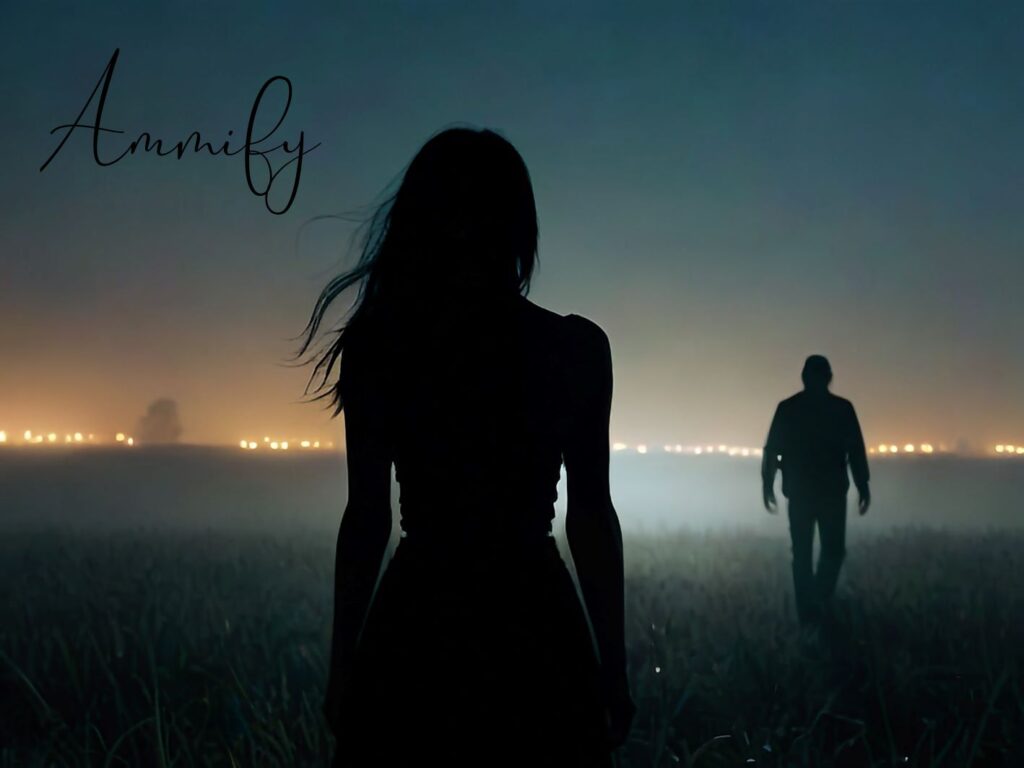
You can’t help but wonder how much of this might be autobiographical. The phoenix tattoo on Ammy’s shoulder suggests that she has been through some of life’s ordeals. And she is clearly able to tap into some raw emotions. Though her singing always possesses a serene tranquility, despite what she might be feeling at the time. And again, the implied notion is to keep holding one’s head above water, much like the album’s illustrated cover. This leads me to another point that is worth discussing, which is the attention to detail in the band’s visual presentation. The epitome being reached with their music video for “The Truth Will Set You Free“, which is a direct reflection of their cinematic aspirations, making use of green screen technology and cool props and costume designs so as to bring the medieval setting to life. These scenes are interspersed with performance clips of Ammy and Pete, who are joined by several other musicians. It does make me wonder how practical it will be for Ammify to tour, given the large contingent apparently required to replicate their sound in a live setting.

It’s entirely understandable though. There is a lot going on in their music. And the truth is that there is a lot to dissect on this album. More than I can realistically cover in this review. Even if I could, doing so would probably deprive listeners of the gift of discovery, and that’s part of the appeal of this album. It is the type of release that encourages repeat listening, notwithstanding the allure of the high-quality musicianship. Each subsequent playthrough reveals something new that you maybe hadn’t noticed before. Ammy and Pete have surely packed a lot in here, and it’s obvious that they make a formidable team together. I haven’t even mentioned one of my favourite tracks yet, which for the record is “Hey! You! (Over and Over)“, with its laidback jazz-lounge infused passages. There’s even a hidden track in here. A concept which may seem foreign to most people brought up on streaming, but which I’m absolutely grateful to see supported again (and it’s definitely worth seeking out). As this is their very first album, you really couldn’t ask for anything more from Ammify. It sets up the band perfectly for the future, and highlights a creative freedom that already differentiates them from the rest of the competition.

Verdict: Ammify’s “Lost, Not Hiding” continues to establish the legitimacy of cinematic metal as a genre unto itself. The album brings listeners a truly unique soundscape and narrative structure, while simultaneously presenting it with an impactful honesty that’s bound to foster a deeper connection with the audience.

Categories
Album Review Staff Review

Gallia – Obscura (Review)

If ever there was a band you could recommend to fans of Nightwish’s Anette Olzon-era albums (Dark Passion Play / Imaginaerum), then Gallia would most certainly be it. Founded in Belgium, this four-person strong cinematic metal project independently put out its first full-length album, Obscura, all the way back in September 2, 2022. So obscure was this release that it managed to escape our attention entirely. Until very recently, that is. And we’re happy to have found it, as it’s clearly an album deserving of greater visibility. Even if it leaves a strong feeling of déjà vu.

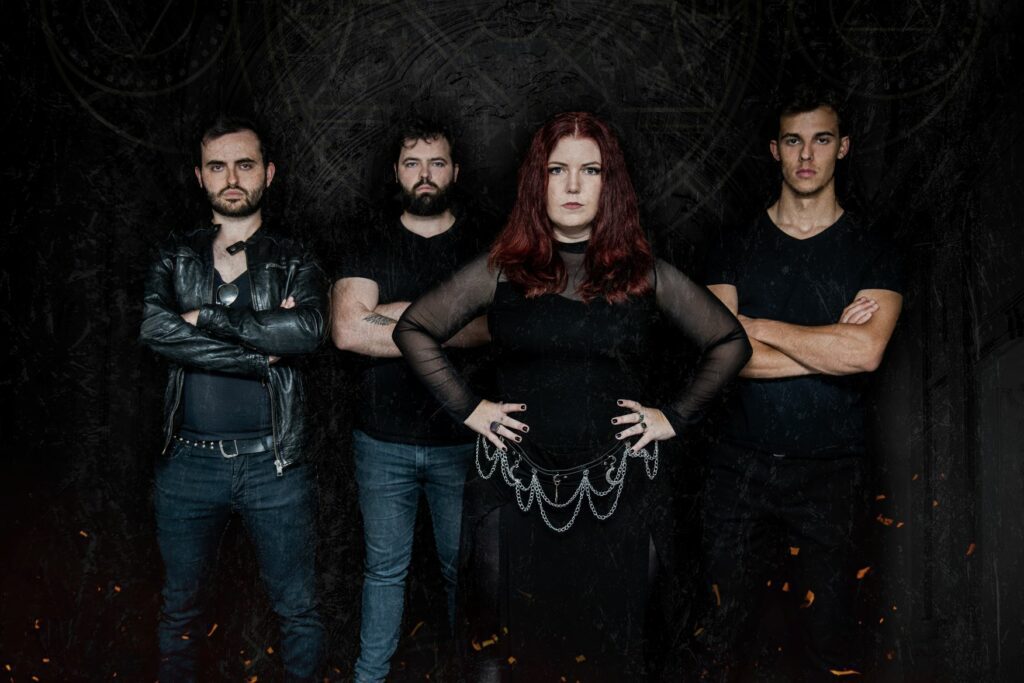
The term ‘cinematic metal’ is still a relatively new label, but one that we have started to see bandied around by a couple of other bands – most notably Catalyst Crime and Malevolent. And while we are not sure if Gallia can claim to be the earliest progenitors of this particular term, they certainly embody it in every single aspect of what they do. From the epic choirs and orchestral symphonies to the bombastic arrangements and soaring melodies, all of it screams Hollywood production. Almost as though you are listening to the soundtrack of a mega-blockbuster movie. And at the epicentre of it all is our cast of visionary performers: Yannic Maris (Guitar), Laurens Vandebroek (Bass), Ties Jehoul (Drums), and last but not least, the impeccable leading lady which is Elyn Vandenwyngaert (Vocals).

Aperture” gives us a preliminary peek into the fully realised musical realm that Gallia have created, with a short one-minute introduction that includes a ticking clock amidst a melody of sparkly keyboard notes, instilling that “Disney” magic and sense of childish wonder. It’s not long until we are suddenly in the thick of it, as the prelude flows directly into “Return of Time“, with its forceful guitar parts and momentous epicness. The sheer weightfulness of the downtuned riffs displaces a significant volume of air particles in front of your speakers, and gives rise to a new definition of the phrase ‘wall of sound’. It feels absolutely massive. And the interplay between Elyn’s vocal lines and the crunching distortion within the verses is also perfectly executed. With “Blackout Queen“, we start to witness the band’s knack for storytelling break out in the lyrics, proving once again that the idea behind cinematic metal is not so baseless or outlandish. And it’s around this moment that I discover there is a fully-fledged storyline that runs throughout the production, which has even been fleshed out in a fictional novel with each chapter of the book representing one of the songs. I can’t help but be impressed by the scope and ambition of this project, and part of me definitely wants to explore this further to see if it adds a new dimension. But for the purposes of completing this review within a timely manner, I must be satisfied with solely basing my opinion on the music. The theatrics continue on “Mirage“, which has a distinct carnival-esque flavour to it, again harking back to Nightwish’s Imaginaerum, and focuses on themes of deception and masquerading as something else.

Disillusion caught me once more
I have been here before
I’m familiar with your disguise
Tell me no more of your lies

Gallia – “Mirage”

As you may have noticed, favourable comparisons have been drawn between Gallia and Nightwish, and while that observation absolutely has merit, it’s also a disservice to imply the material here is simply derivative. There are indeed many similarities. Yet flourishes of originality do exist on the album. But unfortunately for the next track, “Reflection“, this is not one of those times. To the extent that we even see Gallia winding up a music box, as we approach this mid-way point of the tracklist. “Path of the Nomad” brings us back to a much stronger footing, with tribal drums and an acoustic set of instruments and various wind accompaniments bestowing a distinctly natural sound. This is played out even more with the folksy interlude of “Free Me“, which creates an earthly, mystical atmosphere that guides us to the next track, “Spirit of the Sea“. A song that is a sea shanty of sorts, except interspersed with far heavier passages. But the real highlight is next with “Chaos“.

This track showcases a hefty rhythm, plodding guitars, and an abundance of machine-gun double-bass drum kicks, which are all presented in synchronicity with the opulent backdrop of angelic choirs, and heroic-sounding orchestral movements. While not operatic in nature, Elyn’s singing still fits the song perfectly, and her high notes are impressive. The half-point breakdown is followed by an arabesque passage, once again adding another twist to this song, in addition to highlighting the band’s immense versatility. Gallia picks up this Middle-Eastern thread again for “Euphoria“, while “Tears of Gold” is the designated ‘epic’ song of the album, clocking in at just over seven and a half minutes. And it doesn’t disappoint. As you would expect, the longer-form allows for more shifts and changes, and the band does well to flex its creative muscles. The ticking clock returns towards the very end, signalling that our adventure is soon coming to an end. There is just enough time for one more song.

It takes the form of “New World“, and this time it’s a far simpler affair. Think along the lines of Nightwish’sEva“, and you’ll be getting close. It’s a smart way to cool off from an album that has been mostly full-on since it commenced, but there is still a triumphant send-off in the final minute or so. And Gallia has every reason to want to celebrate with this outing. It’s an incredible first chapter for any band, and a truly astounding achievement if you consider the high production value. It’s only real downfall is its strong resemblance to that which has come before, and for many listeners, this may not even be an issue.

Verdict: Gallia’s “Obscura” wears its influences a little too evidently on its sleeve. But you can’t deny the quality of this production. If you look closely enough, you will also see that there is a deeper underlying creativity. Here’s hoping this is less hidden in future.