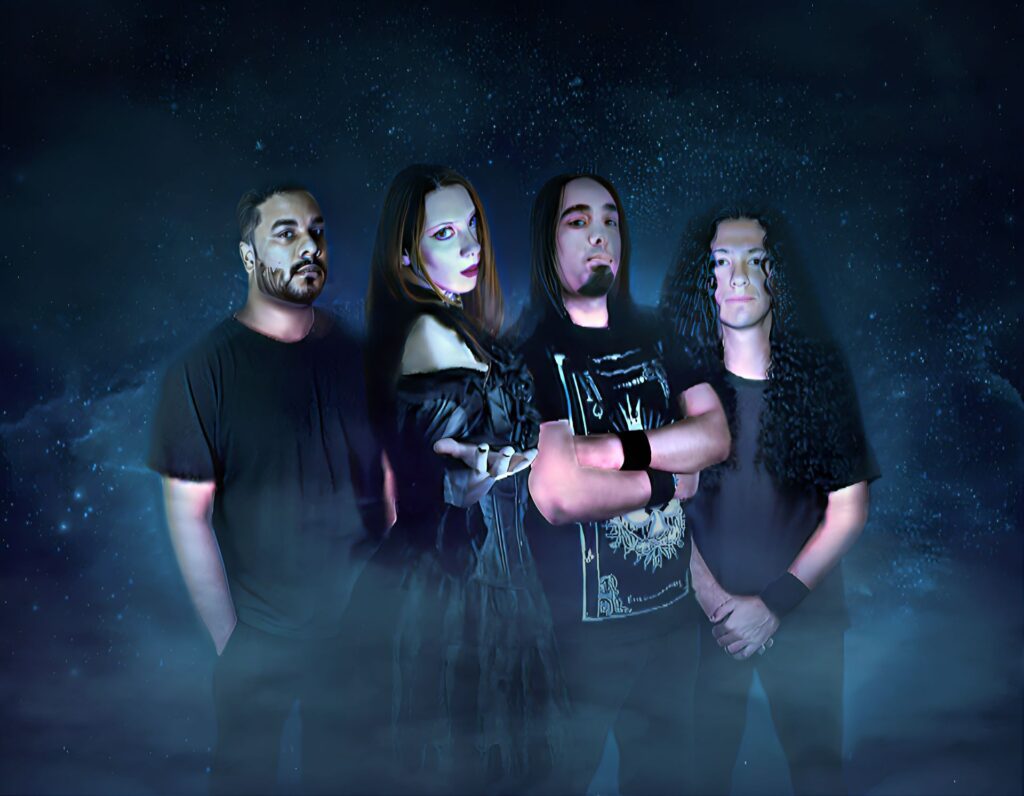
Elenion recently released their epic debut album, “The Symphony of the Night“, and with it a fully-realised vision and grand design that is so rarely established on a first release. Such meticulous detail, combined with the sheer scope of the project, means that there is plenty for listeners to take in, and discover with their music. To help us unpack some of it, Elenion kindly agreed to answer our questions about the album, and to talk more about the band in general. We are highly grateful for their generous and in-depth responses. You can read the full interview below!
Congratulations on the release of your debut album. It’s obvious that a great deal of effort and precision went into this production. Can you tell us about your journey in making the album, and how the band is feeling about its early reception?
Berenice: Thank you so much! The process of creating this album was incredibly long, both technically and artistically. Some of the songs were written over the span of several years (in fact, the title track is something I originally composed when I was 15) but it wasn’t until last year that the band finally settled into its current lineup. That was the turning point. It allowed us to finish the remaining recordings, let each member bring their own sound and identity to the project, and refine the final details in post-production.
We’re truly happy with the early reception! Despite the challenges and the amount of work behind this album, we were afraid it would feel like shooting an arrow into the void, since we’re completely independent… that it would reach only a handful of ears. Fortunately, that hasn’t been the case at all!
The album itself takes listeners on a journey through the Music of The Spheres. Can you describe this philosophical concept for our readers, and how it fits with the exploration of darkness and its multiple dimensions?
Berenice: In simple terms, the original concept of the Music of the Spheres comes from a philosophical and metaphysical idea that the movement of celestial bodies generates a cosmic harmony, a kind of music that is inaudible to the human ear. This theory, attributed to Pythagoras, represents the notion of universal order, cosmic beauty, and humanity’s search for meaning.
In our album, we expand this idea in a more introspective direction. We suggest that in order to hear (or at least perceive) that primordial music, we must first recognize ourselves in our full complexity: from the smallest shadows within us to the vastness that surrounds us. Only by integrating all the parts that inhabit both our inner and outer worlds can we approach that cosmic harmony.
This is why we plan to follow a journey through the classical elements—water, fire, air, earth, and aether (divided into light and darkness)—as a path toward wholeness. And that journey begins in darkness, a state that can be understood as the first condition of the universe and, in many ways, the beginning of life itself.
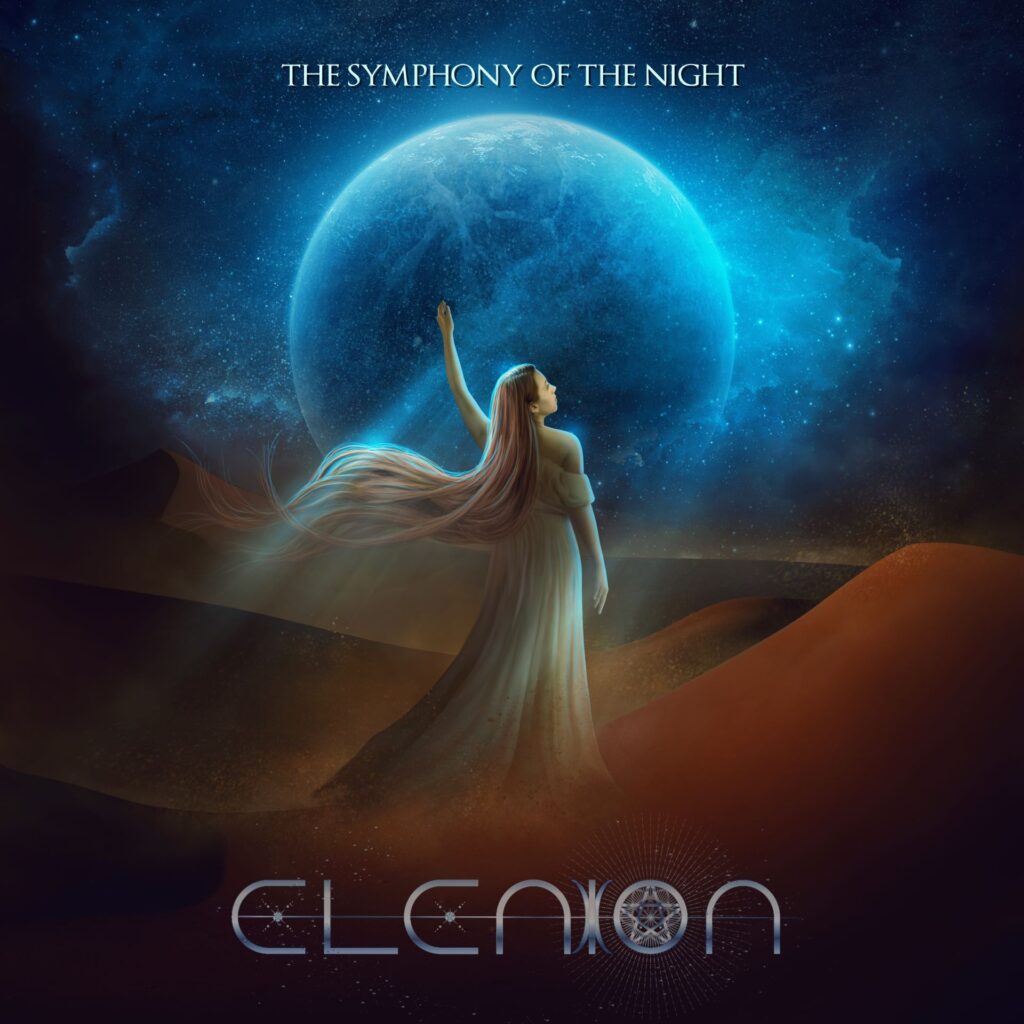
“The Symphony of the Night” was released in conjunction with Halloween. This doesn’t seem like mere coincidence. Do you celebrate this holiday? Are there horror movie fans among you?
Berenice: It’s true, it wasn’t a coincidence at all. We had been searching for a release date that matched the spirit of the album, and when we realized that Halloween fell on a Friday this year, it just felt right. On a personal level, it’s also a meaningful time for me. I’m a practitioner of paganism, and in the Southern Hemisphere we celebrate Beltane during this season ( the “sacred fires,” which symbolically stands opposite to Halloween/Samhain) . Considering that our band is made up of members from all over the world, I loved that this duality ( light and darkness, life and death) naturally echoed in the album’s release date as well.
As for horror movies… honestly, I’m not much of a fan myself. But I do enjoy books in the genre, especially cosmic horror, like the works of H. P. Lovecraft.
Icaro: I thought about releasing it on 2 October, because it would mark the 28th anniversary of Castlevania: The Symphony of the Night. It has nothing to do with the theme of the album, but it would have been nice.
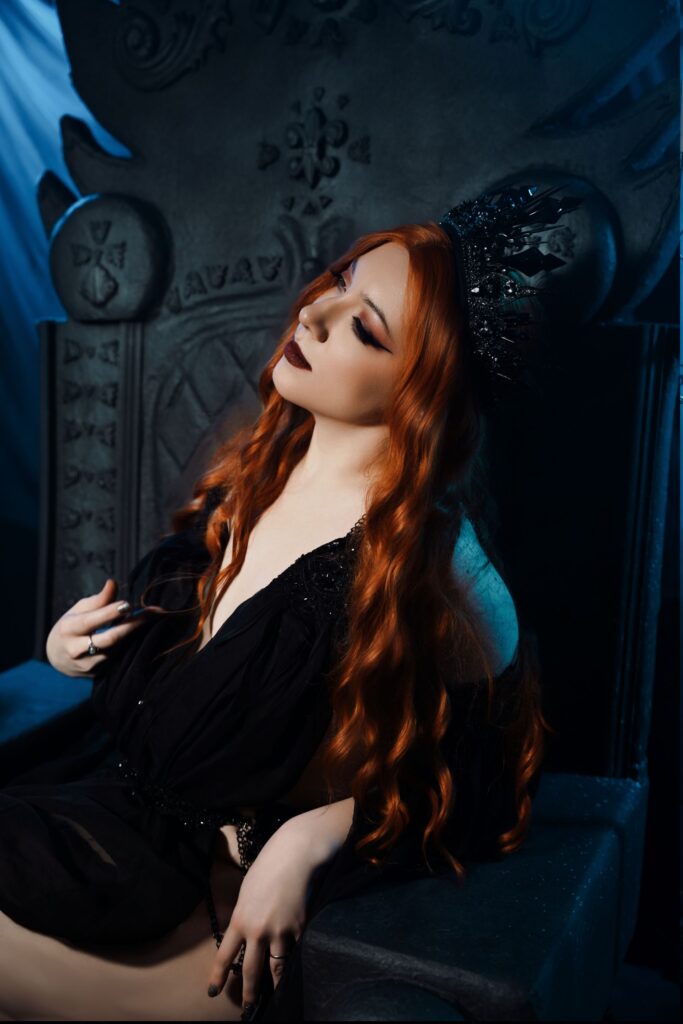
Despite the challenges and the amount of work behind this album, we were afraid it would feel like shooting an arrow into the void… Fortunately, that hasn’t been the case at all!
Benerice Piceda
You have adopted the term “World Metal” to define your sound. What are some of the distinct influences that are represented on this album? And how did you integrate the cultural diversity in your compositions, while still maintaining a level of connection between these unique elements?
Berenice: The idea of “World Metal” came to me when I realized that, although our music could be categorized as symphonic metal, progressive metal, or even power metal, it carries a strong presence of folkloric influences from different parts of the world. Those genres are definitely our foundation, but they didn’t fully capture what we were creating. That’s when I remembered the concept of world music, where artists like Enya or Loreena McKennitt blend diverse cultural elements, only without the metal component. From there, the term World Metal naturally took shape for us.
As for how we maintain a sense of connection between all these culturally diverse elements, I believe the key, besides the metal itself, lies in the orchestration. We invested a huge amount of work into the orchestral arrangements, and they are a central pillar of our sound. In fact, we even released a “side B” of the album featuring the orchestral versions alone. To me, the orchestration is what allows traditional instruments from various cultures to blend in harmoniously. They keep their identity, but don’t feel out of place. The orchestral framework acts as a bridge that unifies all these sonic colors within the same musical universe.
Icaro: This idea of combining film orchestras with elements of music from various parts of the world and electronic elements, as a kind of signature sound that I have. We have several musical influences hidden throughout the album. Others are much more obvious, such as The Last Dark, where the choruses carry Brazilian rhythms. Another gem that stood out was the introduction to Conqueror, where I brought the Hollywood side to the album in an even more striking way.
Now, something that few people really understood was the introduction to Starborn, which I based on pirate themes. Although I shared the work of orchestrating the album with Berenice, she still allowed me to add a lot of my own vision to the songs she wrote. In addition to these, there is The Symphony of the Night itself, which has Arabic elements from start to finish, Sailor’s Tale, which has Celtic influences, etc. So the term “world metal” was almost natural for us.
Berenice, you are not only credited with vocals and orchestration, but also the use of instruments such as whistles and the Lyre, to bring folkloric influences into the mix. Can you describe some of the key places where these sounds are featured, and how they add to the album’s multicultural identity?
Berenice: For the Celtic lyre, I recorded a part in “Invocation”. Even though we ultimately decided to make it almost inaudible in the final mix for stylistic reasons, it still adds a subtle texture that blends with the ritual atmosphere of the track. I then used a lyre closer to the traditional Greek style in “The Wild Goddess”, the following track, since the song is dedicated to the goddess Artemis. I also played tin whistle on Sailor’s Tale, which is a ballad with a very clear Celtic influence.
But the most unusual choice appears with the low whistle. I don’t think anyone could spot it unless I point it out. In the opening section of “The Symphony of the Night”, you’ll hear a wind instrument that sounds a bit like a duduk… but it isn’t. I recorded the low whistle in a way that forced its tone to become more nasal, bringing it closer to that Middle Eastern character. It’s a small trick, but one I loved both musically and conceptually, like a way of connecting very different cultures through a single gesture.
The global concept of course extends to the fact that the band’s line-up is also international. How significant was the logistical hurdle of writing and recording such complex, orchestrated material as members were scattered across different continents?
Berenice: From a compositional standpoint, most of the songwriting on this first album was done by me. It wasn’t an intentional artistic choice, but simply a result of the band’s timeline, since some of the members, like Kublai and Eric, joined us later in the process.
That said, Ícaro, whom I’ve had the pleasure of working with for several years, composed the instrumental foundations for some tracks on his own. From there, I developed the vocal and choral lines and added or adjusted portions of the orchestration, as he did with some of the songs I wrote.
The only song that was fully co-written from the ground up was Starborn, which Ícaro and I created almost 50/50. It was genuinely a joy to compose together despite the distance—though it did involve countless files, sheet music, and demos being sent back and forth between countries!
As for the recording process, mixing, and mastering, the key was constant communication: video calls, virtual meetings, and an enormous exchange of files. The logistics were definitely challenging, but steady coordination (and genuine passion for what we were doing) made it all possible.
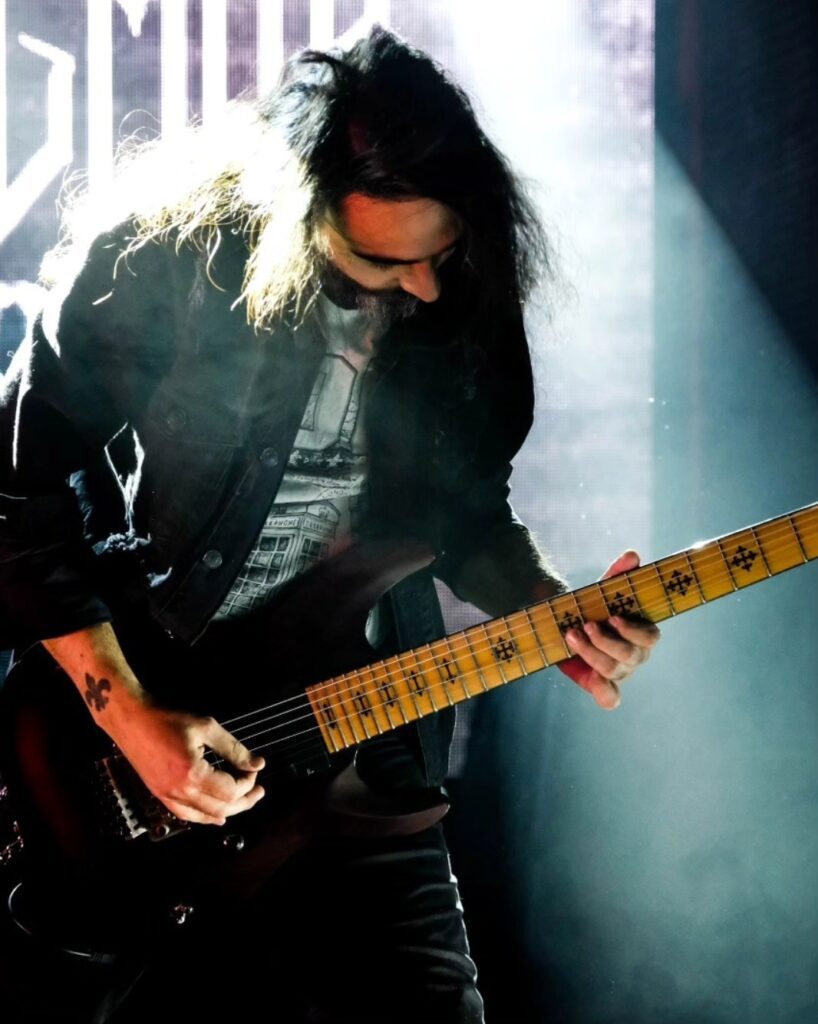
KUBLAI: I’ve joined the band as a last member. But I am pretty happy to be in this band with my good friends. We spent a lot of time and effort to make this album. Personally, it took 3 months to partially record the guitars for the whole album.
“The Symphony of the Night” boasts songs in five different languages (English, Spanish, Latin, Greek and German). How much did the narrative meaning of the song play into the language selection? And were there any languages you thought of attempting but could not include for any reason?
Berenice: I have to admit that one of the main reasons the album features five languages is simply my passion for linguistics. I love studying languages and exploring how each culture’s history, worldview, and identity are reflected in the way its people speak. I enjoy everything from the practical side of language learning to the more creative aspects… including fantasy languages, like those created by J. R. R. Tolkien. I’m even developing a few of my own, not only for Elenion but also for a literary project I’m currently revising, which is also related to the band’s storytelling.
The musicality of each language plays a huge role in my vocal writing. Beyond my self-taught studies, I spent about four years studying classical singing at a conservatory, where diction in several operatic languages was part of the curriculum. All of that made it natural for me to think carefully about which language each song “wanted” to be in. My approach is always to consider the narrative essence of the piece first, and then choose the language. A clear example is “An den Mond”: it’s based on a Schubert poem and built structurally like a Baroque chorale… everything about it “asked” to be in German.
There are other languages I know and love (like Italian) that simply didn’t feel right for this album… at least not yet, haha. But I can promise there will be even more linguistic variety in future releases!
Was accessibility a focus in making this album? Did you have any concerns of perhaps diluting the comprehension of the songs by including so many languages for listeners?
Berenice: From the very beginning of Elenion, my biggest question regarding language was whether the lyrics should be in Spanish (since I’m based in Argentina) or in English, to give the project a more global approach, as it’s the closest thing we have to a lingua franca. As the project evolved, it almost answered that question for me, haha.
I eventually decided that English would be the primary language, but I also felt that at least one song needed to be in Spanish, and that certain passages or shorter pieces could appear in other languages depending on the essential identity of each composition. Regarding accessibility, yes… it was absolutely a consideration. To make the album easier to understand, we created lyric visualizers for every track, and we uploaded translations of all non-English sections into both English and Spanish. Also we’re planning to upload Spanish translations for every song. This way, we hope listeners can connect with the meaning, no matter which language the vocals are in.
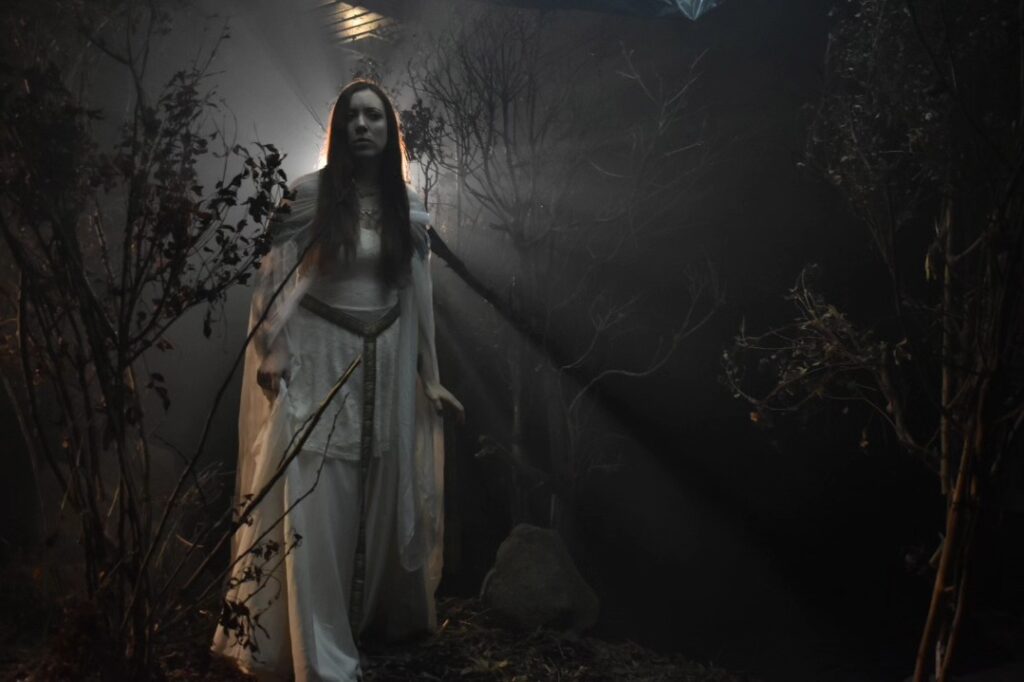
I enjoy everything from the practical side of language learning to the more creative aspects… including fantasy languages, like those created by J. R. R. Tolkien. I’m even developing a few of my own…
Berenice Piceda
The track “Conqueror of the Sky” references the myth of Icarus and the dangers that usually come with aspiration. With such an ambitious project as your first album, was there ever the fear that you were taking the same risk and “flying too close to the sun” by attempting such a huge statement?
Berenice: Absolutely…more than once, naturally. As the years went by and we kept refining details, arrangements, and technical aspects, watching the release date get pushed further and further, I often caught myself thinking, “Is all this effort really worth it?”
And to be honest, a part of me still wonders about that in a way. There’s always the feeling that some nuances might never reach the ears you hoped for, or at least not with the level of detail you imagined. But even so, we’re certain that we gave the very best we could with the resources we had. We just hope we don’t end up burning ourselves in the process like Icarus, haha.
Your modern adaptation of Mozart’s “Queen of the Night” was particularly daring and courageous, but you perform it spectacularly. How challenging was it to interpret this classic piece, and create a fresh take for symphonic metal fans?
Berenice: Thank you so much! To be honest, it gave me nightmares… quite literally. I would dream about practicing it over and over, or trying to record it and never getting the result I wanted, haha. But now, I’m quite satisfied with how it turned out, although I would still improve many things.
My approach wasn’t purely operatic, even if it might sound that way. My vocal placement is always somewhat mixed, and that remained true here. I started from a conceptual standpoint: honoring the spirit of the original piece while adapting it to the album’s narrative and this idea of bridging different eras and sonic worlds. Then I focused on studying where Mozart placed his strongest orchestral emphasis, and what emotions he intended in each section, trying to keep in the metal section. It was also challenging to reinterpret the aria emotionally. If you listen to the original, it can almost sound cheerful… until you read the lyrics. To me, it depicts a mother on the brink of madness, terrified that her daughter is choosing a disastrous path…so desperate that she begs her to kill her adversary.
Vocally and interpretatively, it was intense. And honestly, I’m not sure I’ll tackle another aria like this again. I’ve already promised my bandmates they won’t have to hear me sing like I just inhaled a helium balloon ever again, haha.
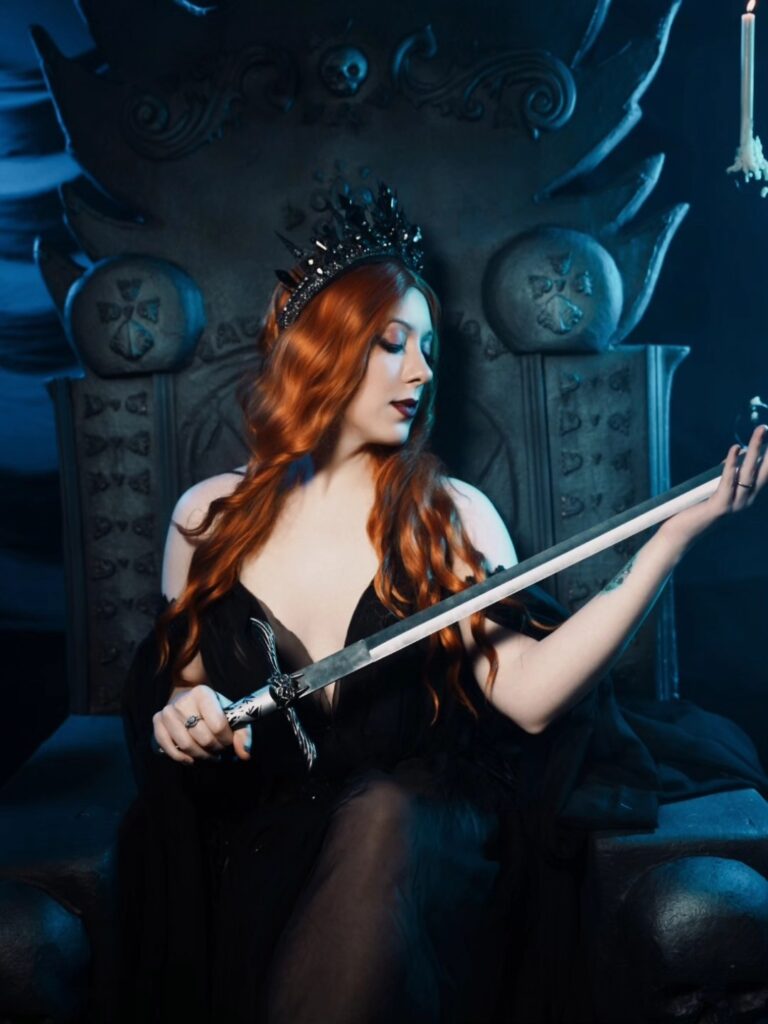
I love studying languages and exploring how each culture’s history, worldview, and identity are reflected in the way its people speak.
Berenice Piceda
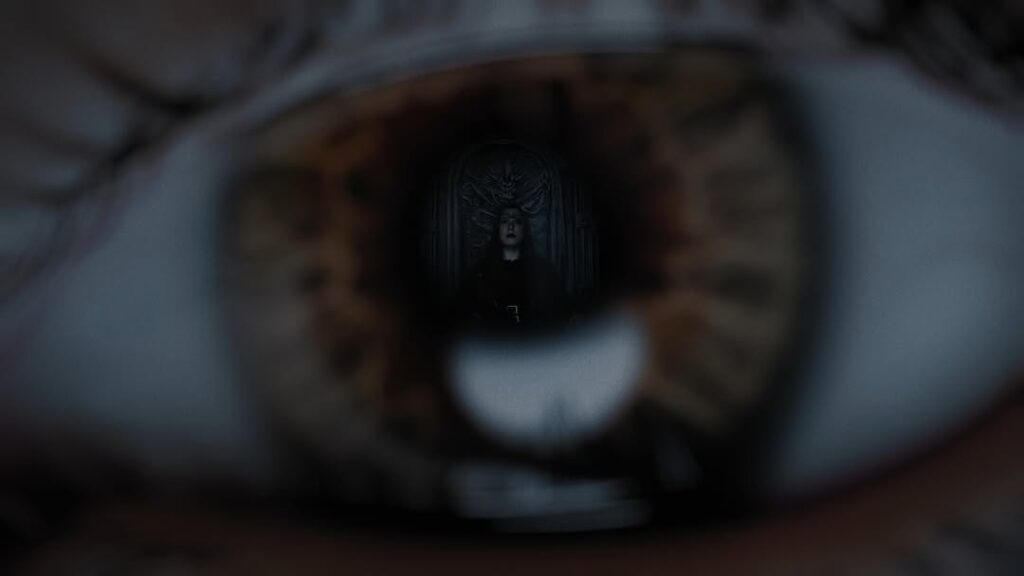
You released your first cinematic music video for “The Last Dark” prior to the release of “The Symphony of the Night”, and received a tremendous view count in just a few short weeks. Can you discuss what this song (and video) is all about, and why you think it has connected so well with viewers online?
Berenice: (This one is going to be long, I apologise in advance!)
Both the song and the video share the same underlying concept: how far one is willing to go to uncover what is hidden… even when what’s hidden isn’t in others, but within oneself. That inner darkness we so often avoid facing. The lyrics actually tell three stories at the same time (and I think this is the first time I’ve said this publicly):1) An experience I had as a very young child, somewhere between wakefulness and dreaming.
2) A much more recent experience, about four years ago, when I suddenly lost a significant portion of my vision (I have partial blindness) and went through seven surgeries to prevent losing it completely. The emotional and symbolic weight of that process is woven into the song.
3) References to a novel I’m currently revising, which explores similar themes from a fictional angle. I even included a phrase in the choral part of a language I’ve created for that novel.These three stories connect through the same conceptual core. And there was something curious during the video shoot: the close-up shots of my eyes weren’t my idea at all. I wrote the general script, but I didn’t include those at all. Only in the final close-up, (the one with a super zoom) I told the director, “Maybe try filming the other eye; in this one you’ll see my prosthesis and my intraocular lens.” That’s when I explained my condition to her, and I think it unintentionally added an extra layer of meaning to the video, even though she wasn’t aware of it before.
As for why the video connected so strongly online, I’m not entirely sure, but I think two things played a role. First, the structure of the song. It doesn’t follow the classic verse–chorus–verse pattern. It’s more intertwined, more unconventional. That led to some criticism, yes, but I think it also captured people’s attention, consciously or subconsciously. That’s largely thanks to Ícaro’s great writing. And second, the visual work of the video team. They created something truly beautiful and carefully crafted, and I think that aesthetic quality also helped the piece resonate with viewers.
Icaro: About the instrumental part of The Last Dark:
I always listened to a lot of Brazilian music, it was the best stuff when I was in music school. It was super comfortable to play on the drums. At the same time, I’ve always been an avid listener of progressive metal, so I wanted to bring something more from that side into the album. It was something I felt was missing, heavier music.
It’s not as heavy as the current songs on the market, but every detail of this song makes it dense. It’s a very simple structure, but the way we built it around it is what makes it so striking. No instrument does anything considered virtuosic, but the emotional charge that the lyrics carry makes it so impactful. It’s the track with the fewest instruments, but its atmosphere alone fills every space. It’s very exciting in a way to talk about this today, because when I look back and remember that this song was born from a joke with Berenice, combining completely random rhythms, and became the most listened to. Because I literally thought at the time: ‘What if I make Brazilian Folk Djent for an Argentine metal band?
I see some comments and I’m like, “Guys, how did I never notice that detail?”
To be honest, I didn’t think it would get all the attention it did. Not from the band or the audience. But it turned out that choosing it as a single was almost unanimous. I saw the video the day before the release and was moved when I understood what that crazy idea had become. I get messages saying, “Mate, this song saved my year”. I’ve always suffered from imposter syndrome, and I think the result of this work is what helped me.
The Last Dark was one of two songs that I actually wrote from scratch for Elenion. And I think if it weren’t for that masterful touch that Berenice put into the lyrics, it wouldn’t have become as great as it is.
Have there been any talks about planning a tour and bringing the symphony to a live audience?
Berenice: We’ve definitely daydreamed many times about how amazing it would be to perform together… and even about finally meeting each other in person, which, interestingly, still hasn’t happened for any of us.
But we’re also very aware of the logistical reality: since each of us lives on a different continent, we’d need a fairly large fanbase to at least cover travel and production costs. We’re not giving up, though. It’s something we deeply hope to achieve someday, even if we know it won’t happen right away. But if people continue supporting us and the project keeps growing, we truly hope that in a few years we’ll be able to make it happen.
“The Symphony of the Night” has been described as the first chapter for the band. Can we expect more in the future?
Berenice: Our journey through the elements, in our attempt to perceive the “Music of the Spheres”, is far from over, so there are many adventures still ahead. What will be the element of the next LP? There are a few hints scattered throughout the album, and I think we’ll eventually hold a little contest to see who figures it out first, haha.
We’re also likely to release an EP with a very special concept very, very soon. In the meantime, we hope to keep growing as a band, evolving as professionals, and sharing this adventure with our friends and listeners by giving them the best music we can create.
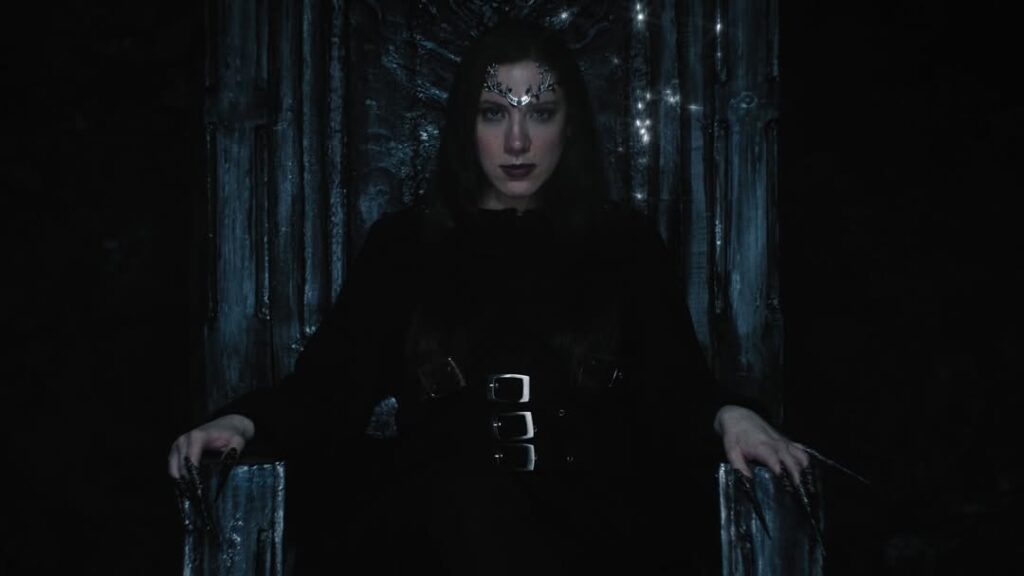
Vocally and interpretatively, “Queen of the Night” was intense. And honestly, I’m not sure I’ll tackle another aria like this again.
Berenice Piceda
Thanks again for the interview. Is there anything else you would like to share?
Berenice: Thank you so much for the support you’ve given us during the release, and for this interview. I truly enjoyed answering every question; they were all incredibly interesting and allowed us to dive deeper into the world of Elenion.
As a fully independent band, having a space like this means a great deal to us. Every listen, every note, every comment… it all matters, and we appreciate it with all our hearts.
And to everyone who read this far: we sincerely hope you’ll continue to accompany us on this soul-journey we’re all sharing in one way or another. You can always reach out to any of us directly through our social media.
Thank you again, and we look forward to what comes next! Love and light to all of you!